News

Biryani Masala Paste

News

Veg vs Non-Veg Biryani: Best Ways to Use Masala Paste

by Priya Foods on Mar 13 2026
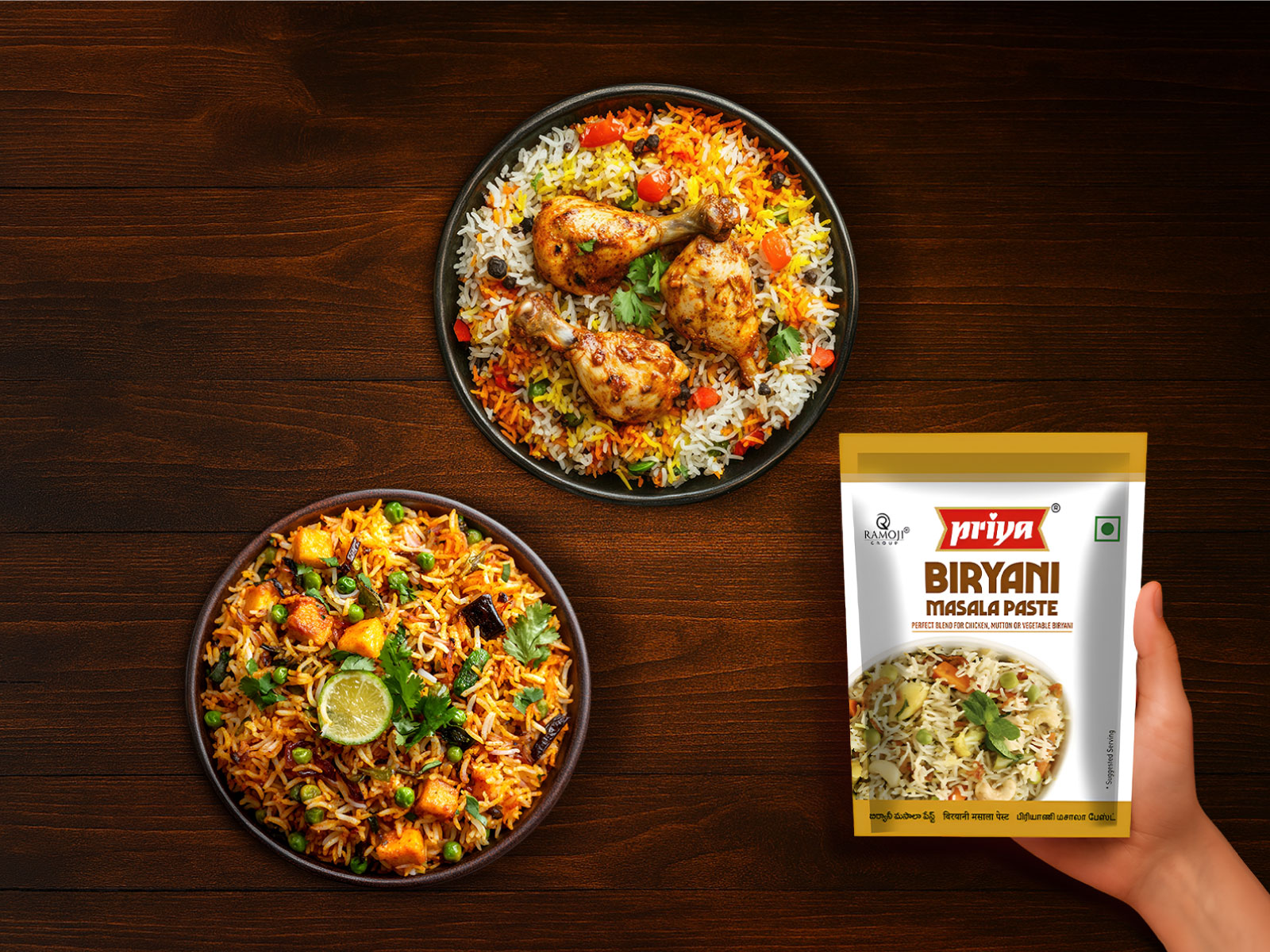
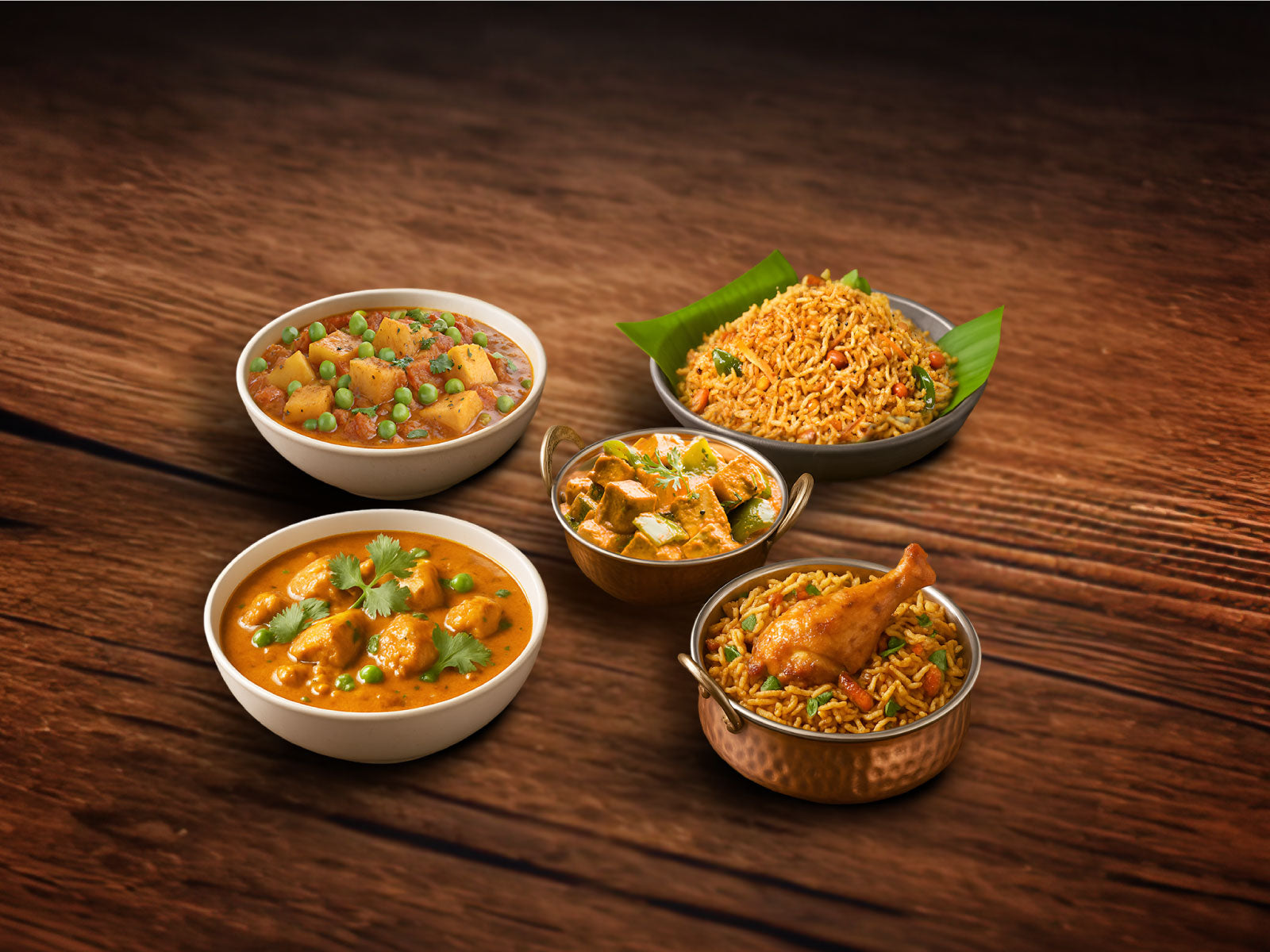
Few dishes spark as much delicious debate as biryani. Whether you swear by fragrant vegetable layers or rich, slow-cooked meat, the heart of every great biryani lies in its spice blend. And today, many home cooks are choosing Biryani Masala Paste over dry spices for deeper flavor and convenience. So how does the use of Veg biryani masala paste differ from traditional biryani masala powder? And what’s the best way to use each for veg and non-veg versions? Let’s break it down. Best Use of : Heat the oil or ghee in a heavy-bottomed pan. Add the whole spices (bay leaf, clove & cardamom). Add 1-2 tablespoons of the Veg Biryani Masala Paste. Cook until fragrant and start to pull away from the sides of the pan. Add a mixture of vegetables (carrots, green beans, peas, potatoes & cauliflowers). Mix in the yogurt for creaminess. Layer on top of partially cooked basmati rice and steam (dum cook). Professional Tip: Vegetables absorb the flavours of spices differently; therefore, allow the masala paste to cook sufficiently to avoid a raw spice taste before adding your rice.  The result will be an aromatic, mildly spiced, beautifully layered veg biryani! Non-Vegetarian Biryani by Biryani Masala Paste Biryani Masala Paste is perfect for non-vegetarian biryanis (chicken/mutton) because it adds moisture and flavor. How to Use It: Marinate the meat (chicken/mutton) by using curd, lime juice/salt with a minimum of 2 Tbsp of Biryani Masala Paste for 30 mins (30 mins minimum for Mutton). Sauté the onions until they become golden brown (approx. 10-15 mins). Place the marinated meat in the pot with the sautéed onions and cook until the meat is tender (approx. 1-2 hrs for chicken; 2-3.5 hrs for mutton). Once the meat is tender, layer the meat with rice and cook (dum) until done. What Makes Paste Better: The ginger-garlic/oil in the paste penetrate into meat fibers, and then they can provide a greater depth of flavor from the inside; this is in contrast to using only ground up powder which will give a more uniform coating of the biryani masala and will produce a better overall texture/gravy of the finished dish. Different Ways to Use Biryani Masala Paste Veg biryani masala paste can be used in other ways besides making biryani: ✔ Pulao with biryani flavour ✔ Masala rice bowls ✔ Gravy (paneer/chicken) with spices ✔ Fried rice on the tawa ✔ Marinating grilled veggie/kebab Biryani masala paste is a quick way to add bold flavour! Spice Level Equation Make sure to start with a little bit of biryani masala paste, whether you are using the veg or non-veg versions. If there are too many spices used, add more salt/chilli separately to taste. By adding yoghurt, the spice level will be toned down. Mix the biryani masala paste with some biryani masala powder and/or spices to make it milder. Balance is what it is all about, particularly when cooking for others with different levels of flavour preferences! Final Verdict: Veg or Non-Veg? The decision to go veg or non-veg biryani is a personal choice, but the process is more important than the ingredients. A quality Biryani Masala Paste will elevate both veg and non-veg biryani by: ✔ Saving time ✔ Enhancing spice absorption ✔ Providing consistent taste ✔ Building an intense aroma For vegetable enthusiasts, Veg biryani masala paste will add depth without dominating the vegetables. For meat enthusiasts, paste will help to infuse strong flavors deep within the meat. In either case, the trick is to sauté the paste correctly and layer it accordingly. With expertly crafted spice blends from Priya Foods, achieving authentic, restaurant-style biryani at home becomes effortless and consistently delicious. FAQs 1. Is Biryani Masala Paste superior to biryani masala powder? Paste is superior in terms of depth of flavor and texture, but powder is convenient for light meals. 2. Can I use Veg biryani masala paste for non-veg biryani? Yes, but make sure the paste's spice strength and salt content are adjusted according to the meat's flavor. 3. How much Biryani Masala Paste do I need? Generally, 1-2 tablespoons of paste for 3-4 people, depending on individual spice tolerance.
How to Store Pickles

News

How to Store Pickles to Keep Them Fresh Longer

by Priya Foods on Mar 13 2026
Indians love pickles! Mango or mixed vegetable they're a part of everyday cooking, bringing zest to every nip and tuck of food! Pickles can be stored properly whether you've made them at home or bought them from one of many companies that sell online pickles so that you'll have fresh, safe, and very tasty pickles when it's time to have some. In this guide, we will provide you with practical tips about extending the life of your picked products and preserving their aroma and taste, so you don’t spoil the enjoyment of eating them by spoiling them. The Importance of Properly Storing Homemade Pickles Online Pickles are traditionally made with oil and/or salt combined with spices and sometimes fermented. When pickles are made using these natural preservatives, they are still subject to spoilage, off-flavours, and microbiological contamination due to contact with air/moisture/heat. Good storage practices will help extend the shelf life, preserve the flavour of your pickles, ensure food safety, and prevent your pickles from losing their crunch and texture. Let’s take a look at some of the best ways to store your pickles for the longest possible time. 1. Jars and Tools Must Be Clean and Completely Dry Before anything else. Make sure you are only using glass or ceramic jars that have been cleaned and completely dried for storing pickles. Do not use metal containers to store pickles because they may react with the spices and oils used to make your pickles. Always use only clean and completely dry spoons to scoop pickles from a jar or container as any moisture on the spoon will allow for spoilage to occur. It is amazing how much quicker a pickle will spoil due to the simple mistake of using a wet spoon! 2. Avoid Storing in Direct Sunlight or High Temperatures Direct sunlight, high temperature, and high humidity create increased levels of oxidation and fermentation within food products such as pickles. To prevent the development of these problems: Store jars in a cool, dry pantry Avoid placement near a stove, oven or direct sunlight  Maintain at room temperature Maintaining proper temperature can help produce and preserve mango or mixed vegetable pickles by maintaining the flavour quality, preventing them from becoming cloudy and/or bitter. 3. Place a layer of Oil Over Top Of Pickles Oil is critical to the preservation of pickles as follows: Always maintain a thin layer of oil above the pickle mixture. This oil layer prevents air and moisture from entering the pickle jar (or other container). If you notice the oil layer surrounding the pickles begins to diminish, top it with some clean new oil. This is even more important for hot and/or sour pickles, as they usually take a longer period of time to preserve. 4. Airtight Sealed Pickles Will Not Spoil You might buy your pickles from a pickles store online, like Priya Foods or you may be making your own pickles. Make sure to fully seal the jar after every use Do not leave the jar open for any length of time Use jars that have tight-fitting lids By keeping the jar sealed and air-tight, you are preventing air (oxygen) from entering the jar or your pickles, thus preserving the flavor and color. 5. Prevent Pickles from Being Exposed to Water or Moisture Water causes pickles to rot. Water creates mold on pickles, gives off bad odors, and spoil your pickles rapidly. Always: Prevent water from entering the jar Do Not Use Wet Utensils To Scoop Pickles Wipe the rim of the jar each time you scoop pickle out of the jar These small things can help keep your pickles fresher longer. Chill When Needed (Especially in The Summer)  In hot locations or during summertime, it could help to keep your pickles cold: Mango pickle (hence) or mixed vegetable pickle would develop much slower in the fridge. Homemade pickles that are low in oil will maintain their crunchy texture and brine longer in the fridge. If you are keeping your pickles as traditionally prepared (i.e., in oil and salt), refrigeration is by no means necessary unless temperatures become excessively hot.  Bonus Tip: Look For Verification on any online pickles purchase - After You Open The Pickle Items If you're purchasing homemade pickles online from any reputable source, such as Priya Foods, you should: Ensure that the lid is still sealed upon opening. Verify the "best before" date. Check the storage instructions printed on the label. This information would help give you the appropriate conditions for your pickled items after opening and unpacking them.  For instance, Priya Foods has many types of pickles available, such as very hot mango pickle and mixed vegetable; each is accompanied by specific instructions to provide optimum taste and freshness. If You Want To Know If A Pickle Has Gone Bad Before Eating It, Look For:  A rancid smell Signs of visible mould A significant colour change Bubbles of foam on the top FAQs 1. Is it possible to refrigerate online pickles? Yes, and especially in summertime, refrigeration of online pickles like mango pickle and mixed vegetable pickle can help extend their durability. 2. What happens when I use oil to store my homemade pickles online, and they become bad? If there is moisture or air in the jar or the utensils used to retrieve from the jar are dirty or wet, your pickles may go bad. 3. How long is a homemade pickles online good for?  Traditional oil-based pickles should be stored properly for 6–12 months. Fresh vegetable pickles should remain good for at least 2–4 months.
Mixed Vegetable Pickle

News

Best Ways to Enjoy Mixed Vegetable Pickle with Indian Dishes

by Priya Foods on Jan 30 2026
Indian meals are famous for their rich flavours, immense variety, and aroma throughout. Usually, every meal includes a main dish in addition to smaller side items.  One favourite side item in every Indian household is mixed vegetable pickle. The side dish is prepared by using a mix of ingredients, including vegetables, spices, and oil. This pickle variant has a strong taste to enrich any simple food.  A good pickle offers a combination of spicy, tangy, and slightly sour flavours. A great pickle is capable of turning plain rice, rotis, or snacks into a fully enjoyable meal. You might favour a simple meal or rich traditional dishes. The right vegetable pickle will help you enjoy your dishes. You should know of interesting ways to use this pickle to enhance your food.  How to Enhance Your Meals with Mixed Vegetable Pickle The pickle tastes great with Indian food because it enhances flavours. When you add a spoon of pickle, it offers sharpness and richness. The combination of vegetables like carrot, cauliflower, lemon, chilli, and mango creates layers of taste. This is why mixed vegetable pickle have been part of Indian kitchens for generations.  Rice Dishes Rice-based meals are one of the easiest ways to enjoy mixed vegetable pickle. Plain steamed rice with ghee tastes great. However, you can add a little pickle to make it exciting. Curd rice with a small serving of pickle on the side is another classic combination. Dishes like vegetable pulao or lemon rice taste great with mixed pickle. It helps to add extra spice. This is why many people choose to keep mixed vegetable pickle online ready at home for quick meals. Rotis and Parathas These items feel incomplete without a tasty side. Mixed pickle works as a quick and satisfying option. Stuffed parathas taste better with a spoon of pickle and some curd. Even simple chapatis with vegetable sabzi become more enjoyable when you have them with homemade mixed vegetable pickle. South Indian Dishes This cuisine often includes mild dishes that taste great with bold flavours. Mixed vegetable pickle enrich the taste here. Idlis or dosas with chutney can be enhanced with a little pickle on the side. It also tastes great with pongal or plain rice meals. The spice and tang of pickles keep the meal interesting. Snacks & Light Meals A spoon of pickle with bread, toast, or khichdi makes a light meal more flavourful. Some people even enjoy it with curd and crackers. You can buy mixed vegetable pickle online to enjoy these combinations anytime. What Makes Homemade Mixed Vegetable Pickle So Special A lot of people still choose homemade mixed pickle because it tastes fresh and traditional. It is usually prepared in small batches using family recipes. However, not everyone has the time to prepare pickles at home. This is where trusted brands help by offering authentic taste and supreme quality. Why Choose Priya Foods Pickles Priya Foods’ range of mixed vegetable pickles is prepared with the help of the best quality of vegetables and traditional spices. We follow strict quality and hygiene standards to make sure every jar delivers the same taste you expect from a homemade mixed vegetable pickle. Our recipes are traditional. They are prepared with the help of modern processes for overall safety and freshness.  If you are looking for convenience and taste, our pickle is easily available as a mixed vegetable pickle online. FAQs What is mixed vegetable pickle made of? Mixed vegetable pickle with a variety of vegetables, spices, oil, and salt. Is it okay to eat pickles every day? Mixed pickles can be eaten daily in small quantities. Is homemade pickle better than store-bought? Homemade pickles offer freshness. Trusted brands provide consistent quality. Can I buy vegetable pickles online easily? Vegetable pickle online is easily available through reliable food brands. Which dishes go best with vegetable pickles? Vegetable pickles pairs well with rice, rotis, parathas, and snacks.
 Ginger Garlic Paste

News

5 Easy Indian Recipes That Taste Better with Ginger Garlic Paste

by Priya Foods on Jan 30 2026
Indian cooking is loved for its rich flavours and soothing aromas that make every meal unique. Most of these delicious Indian recipes have one ingredient in common; it is ginger garlic paste. This magical ingredient is the base of multiple Indian recipes because it brings out the true flavours of spices and vegetables. Even a small quantity can uplift the taste of a dish and make it more enjoyable.  In day-to-day cooking, ginger garlic paste imparts immense taste and aroma to any dish. It helps in removing the raw smell of other ingredients, adding richness to gravies, and helping other ingredients cook together deliciously.  You could be preparing your weekday meal or cooking in large quantities for a group of members. When you have this paste ready in your kitchen, it helps save time to a great extent.  Find a few useful recipes that taste divine when prepared with this paste.  1. Paneer Butter Masala This is a highly sought-after dish in many homes. The creaminess of the gravy depends on how well the base is cooked. When you saute onions with ginger garlic paste, the raw onion smell disappears faster, and the gravy becomes smoother. The paste helps spices like chilli powder and garam masala combine with each other better to give the dish a restaurant-style taste. Even a small spoon of the paste can enhance the overall flavour. 2. Chicken Curry  It  is one dish where this paste is almost essential. It helps remove the raw smell of chicken and makes the meat absorb spices better. You should add this paste at the right stage to help the chicken cook evenly and taste flavourful from the inside. Many families buy ginger garlic paste 1kg packs to always have enough for regular cooking. 3. Vegetable Pulao  The recipe may look simple. However, its flavour depends on how well the ingredients are cooked together. The paste adds warmth and aroma to the vegetables. When you sautée with whole spices, the paste releases a mild fragrance to make the pulao more enjoyable. It also makes rice grains more flavourful. 4. Dal Tadka  This rich recipe is comfort food for many Indian households. The tadka is what gives dal its unique taste. The paste can be used for tampering to improve the overall taste of your dal recipe. It combines easily with cumin, mustard seeds, and red chillies. This is one recipe where good-quality paste is needed to enrich the flavours. 5. Chilli Chicken  It is a popular Indo-Chinese dish loved by all age groups. The sauce base is effectively prepared by using this ingredient for its rich taste.  You should add the paste early while cooking chicken to lock in flavours and balance the heat from sauces and chillies. A good paste will give your chilli chicken recipe the right smell and taste.  Why You Can Trust Our Paste  We know that taste and richness are important in everyday cooking. That's why Priya Foods uses good ginger and garlic to make Priya ginger garlic paste. Our ingredients are processed under hygienic conditions to maintain freshness and aroma. You might need a small pack for daily use, or a ginger garlic paste 1kg pack for large families or frequent cooking. At Priya Foods, our focus is on preserving authentic Indian flavours and making cooking simple for modern kitchens. Conclusion Ginger garlic paste is a flavour booster that makes Indian food taste complete. With this rich ingredient, you can prepare delicious gravies and curries in your everyday recipes.  Using high-quality Priya ginger garlic paste will save you time, make your food taste better, and make cooking at home more enjoyable. Even simple recipes can taste great if you have the right paste in your kitchen. Questions and Answers What do you use ginger garlic paste for? It is used to enhance flavour and aroma in Indian cooking. Is the paste suitable for daily cooking? It is commonly used in everyday Indian meals. Can I use this paste in vegetarian dishes? It works well in both veg and non-veg recipes. Why choose Priya Ginger Garlic Paste? It offers consistent taste, freshness, and easy cooking. Is ginger garlic paste 1kg suitable for home use? It is ideal for families who cook regularly.
How Priya Foods Makes Your Meals More Nutritious with Bisibele Bhath and Masala Mixes

News

How Priya Foods Makes Your Meals More Nutritious with Bisibele Bhath and Masala Mixes

by Priya Foods on Dec 24 2025
At Priya Foods, we are firm believers that cooking should be a source of nourishment not only for the body but also for the soul. This is the reason why our products, whether pickles, spices, or ready-made masala mixes, are crafted to deliver both authentic taste and balanced nutrition.  By using our spice mixes, particularly when making Bisibele Bhath, you can easily transform a regular meal into a nutritious and delightful one. Our bisibele bhath masala is an easy and foolproof way to achieve perfection in this one-pot dish. In this blog, we will tell you about spices, especially Bisibele Bhath Masala.  Bisibele Bhath Masala: Add Health Benefits Beyond Taste The use of our Bisibele Bhath Masala and other Priya Foods spice mixes for making dals, curries, or for any other purpose in the kitchen is not just an idea to simply enhance the taste and aroma. In fact, the very idea of using such spices as turmeric, coriander, cumin, cloves, cinnamon, fenugreek, and others is based on their numerous benefits to our health, besides their culinary functions. These substances: are full of antioxidants and have properties that help the digestive system, thus promoting digestion, metabolism, and general health, improving nutrient absorption from food. help keep the meal lighter yet satisfying if used in light quantities (instead of heavy oil or gravies). Note that Bisibele Bhath Masala keeps your dish flavourful without heavy gravies or excess oil. They also keep your dish lighter and incredibly satisfying. That’s the reason why recipes prepared with our spices gain health benefits without compromising the taste.  Balanced Meals with Bisibele Bhath Masala: Protein, Fibre & Veggies The secret to a Bisibele Bhath meal that is not only delicious but also healthy lies in the way it is cooked and which spices are used. Such a combination results in a well-balanced intake of carbohydrates, proteins from plants, fiber, vitamins, and minerals, thus making the dish substantial, health-giving, and energizing. You should know that: Lentils are a good source of protein and fibre, which are quite necessary for the body's strength and proper digestion. Vegetables supply the body with essential vitamins and nutrients. Rice or other grains energize the body with carbohydrates. If Bisibele Bhath is prepared with fresh ingredients and the correct Bisibele Bhath masala, the resulting meal is a perfect one-pot dish that is not only wholesome but also delicious and flavourful. Convenience Without Compromise Not all of us, in our modern and hectic lifestyle, can afford the luxury of time required for the processes of chopping, roasting, grinding spices, and even soaking lentils. Priya Foods understands this situation and is thus the problem solver. Our masala mixes, pickles, and ready-to-serve blends are the provisions you need to quickly prepare healthy meals without the stress of long hours that are worn out from ailing health and losing authenticity.  Even by simply using everyday items such as dal, vegetables, rice, along with a pinch of Priya foods masala, one can get a balanced meal that not only tastes good but also energises your entire day. Homemade Feel with Trusted Quality Priya Foods is synonymous with tradition, authenticity, and reliability. Our foods, spices, and mixtures represent the experience of many years and are based on the roots of home-style cooking. Working with our masalas or mixes, you are thus mixing the taste and nutrition wisdom of the past with the convenience and quality standards of modern production. How to Get the Most Nutrition from Priya Foods Bisibele Bhath Masala? To make your dinner both delectable and nutritious using our products: Firstly, you need to bring a big bowl of fresh vegetables to the table to go along with the lentils and rice. Secondly, use oil or ghee sparingly and let the spices do their magic. Thirdly, opt for light, well-balanced meals instead of heavy ones. Moreover, if you couple pulses or legumes with vegetables, grains, and spices, you’re basically having an all-round nutritious meal that’s filled with fibre and energy. When you prepare Bisibele Bhath with our Bisibele Bhath masala, your dals, or vegetable curries, not only taste good but are also healthy for the body. Final Thoughts Priya Foods is not only a company that deals with spices and flavours, but it is also about empowering kitchens all over India to be able to prepare meals that heal, nurture, and bring joy. Now, with well-thought-out masalas and time-honoured recipes, hedonism and health don’t have to be mutually exclusive. Daily meals can be nutritious, well-rounded, and made with love - just as home cooking is meant to be. Whatever dish you make, Bisibele Bhath or any other, a little bit of Priya Foods magic goes a long way in terms of nutrition, taste, and the comforting feeling of tradition. FAQs  Can I cook a balanced meal with Bisibele Bhath Masala? Yes, if you add lentils and veggies. Do I need a lot of oil while cooking with Bisibele Bhath Masala? No, Priya Foods Bisibele Bhath Masala does not require much oil while cooking.  Is Bisibele Bhath Masala good for cooking every day? Absolutely, the spice blend is flavourful.  What makes Priya Foods Bisibele Bhath Masala healthy? It contains Coriander, Black Gram Dal, Chilli Powder, Fenugreek, Cumin. 
Which Priya Foods Chicken Masala Powder Is Best for Indian Cooking?

News

Which Priya Foods Chicken Masala Powder Is Best for Indian Cooking?

by Priya Foods on Dec 23 2025
One of the secrets to home-made chicken dishes is usually to be found in the spice mix. Priya Foods has various variants for one, a regular chicken masala powder, to more vibrant blends like chilli chicken masala powder and pepper chicken masala powder. Each one is made to be a perfect match for a particular style of cooking and a certain taste. The right choice can take your curry, fry, or gravy to a whole new level, making it unforgettable. We have curated a guide that will help you choose the best masala powder for your recipe and taste. Priya Foods Chicken Masala Powder for Classic, Everyday Curries The first chicken masala powder from Priya Foods is the most adaptable one and can be used in daily curries with great results.  This is an excellent choice for regular chicken dishes with gravy, which goes well with rice or chapati.  It provides a very harmonious flavour profile: warmth, aroma, gentle spiciness, a perfect choice for family meals.  Since it is not very spicy, nor is it too mild, it is very suitable for Indian-style gravies, stews, or mixed vegetable/chicken dishes. If you are aiming for a chicken curry that is always liked by the crowd, then this would be the safest option. Chilli Chicken Masala Powder For Spicy, Indo-Chinese or Fiery Dishes Chilli chicken masala powder is the one you need if you are a lover of spicy, bold, and tangy flavours. It is an excellent option for a dry-style such as chilli chicken (fried or gravy), an Indo-Chinese–inspired recipe, or a dish in which you want a stronger kick. The mixture basically consists of red chilli and heat to provide a spicy edge to simple dishes that are both lacking in punch and depth. Very handy for quick snacks, starters, or weekend meals when you want a lot of flavours but do not have time for a long cooking process. Great for stir-fries, dry chicken dishes, or scenarios where chicken is the main idea, and you want the spices to become strongly evident. If your family loves bold heat or you are a fan of Indo-Chinese-style chicken at home, then this is your masala. Pepper Chicken Masala Powder For Rustic, Peppery & Traditional Flavours For a delicious, warm, earthy, and at the same time peppery flavour, which is a very popular taste in many South-Indian kitchens, the pepper chicken masala powder is the answer. It is a very good choice for pepper chicken fry, rustic curries, or homestyle recipes in which the spices are predominant but the dish is not too hot with chillies. The reason for the warmth and depth that comes with the peppery heat is a very different one from that of the chili heat. It also goes wonderfully well with pepper curry, traditional masalas, and even simple chicken stir-fries. The pepper and spices give a nice and comforting warmth that makes it very suitable for the rainy weather or the colder seasons. Perfect for those people who like their food with a spicy warmth but do not want the sharp heat of red chillies, a mellow yet robust taste. If you like your chicken dishes to be earthier and aromatic and have a peppery backbone, then this masala will bring out the best in you of the traditional Indian flavour. FAQs Q1. Can I use chicken masala powder for vegetarian dishes too? Certainly, even though it is made for chicken, the masala can be used in paneer, vegetables, mushrooms, or dals to give them a rich flavor. Q2. Is chilli chicken masala powder very spicy for children? Absolutely, the chilli chicken masala powder is more intense, so if you are cooking for kids or people who are sensitive to spice, please adjust the quantity accordingly. Q3. Is the taste of pepper chicken masala powder milder than that of chilli chicken masala powder? Yes, for instance, pepper chicken masala powder provides warmth and depth without the sharp heat of red chillies, thus being milder and more aromatic. Q4. Which masala is the best for gravy-style chicken curry? The classic chicken masala powder would work best with gravies, as it harmonizes spices and aroma without an overpowering heat. Wrapping Up  The decision of using one or another masala powder may result in an entirely different dish, just to mention a simple weekday curry or a spicy weekend special. Priya Foods has a number of products that go well with different methods of cooking and different taste preferences. Whether you like the classic richness of chicken masala powder, the fiery punch of chilli chicken masala powder, or the warm aroma of pepper chicken masala powder, any of the blends promises to deliver authentic flavour and the  convenience of cooking. So the next time you are planning to cook chicken at home, just choose the masala that best suits your mood and the type of dish, and let Priya Foods bring its signature taste and convenience to your kitchen!
From Aroma to Taste: How Garam Masala Enhances Taste and Health in Everyday Cooking

News

From Aroma to Taste: How Garam Masala Enhances Taste and Health in Everyday Cooking

by Priya Foods on Nov 20 2025
At Priya Foods, we have always believed cooking is more than just fixing a meal; it is about creating memories, sharing warmth, and experiencing our Indian culture. And one of those things that we can all agree upon, and love in every Indian kitchen (and every jar on our shelf) is garam masala.  That comforting scent that envelops you as soon as you open a jar of garam masala powder or when you sprinkle your homemade garam masala: that is not simply aroma, that is a feeling.  It is the smell of home, of cooking sessions, of stories shared while eating lunch. Sure, we all know how great it tastes, but what often goes overlooked is the way in which this blend of spices has a positive effect on the mind and body as well. Take a taste trip with us as we explore garam masala that makes every dish extraordinary and why we, at Priya Foods, are so passionate about perfecting each blend. How does Garam Masala change things?  Whenever we develop a blend, we ask an important question: how can it make a simple dish exceptional? Whether it is your grandmother’s homemade garam masala or our Garam Masala powder, it is the final flourish to bring a dish together.  Here is how it works its magic in your kitchen: Adds depth and dimension - Even the modest dal, or curry, benefits from a sprinkle of Garam Masala. The combination of sweet, hot, and authentic notes enriches every mouthful into a deep, sophisticated flavour.  Balances flavours - Have a sourish tomato curry or strong-flavoured sabzi that tastes biting?  A little sprinkle of Garam Masala takes it back to its mellow side.  Brightens aroma - That irresistible aroma that floats through your house as dinner cooks?  Those are the essential oils of Garam Masala entering the air, which is a signal that the food will soon be served.  The trick is very simple - Add Garam Masala towards the end of cooking or just before serving. This conserves the aromatic, fresh, and lively properties of the spices.  Garam Masala Powder: A Blend That Cares About Your Health Too We typically talk about how the garam masala powder enhances the taste of food, but did you know this garam masala powder is also healthy for you?  Cumin and coriander aid digestion and support nutrient absorption in the body. Black pepper helps stimulate metabolism and enhance nutrient absorption. Cardamom not only supports detoxifying the body but also helps to freshen your breath naturally. Cloves and cinnamon have anti-inflammatory and antioxidant benefits. Overall, these spices warm the body, help promote a healthy digestion, and support a sense of balance, especially in the winter seasons. Homemade Garam Masala vs. Packaged: What's the Difference? We wholeheartedly concur that nothing compares to homemade garam masala, freshly roasted and ground, in small quantities, packed with love and family history.  But not everybody has the time or the means to source so many whole spices. That is where we come in.  At Priya Foods, we deliver the same authenticity, freshness, and quality control that you'd do in your own kitchen. Our masalas are blended with care to ensure each spice retains its depth and aroma, giving you the warmth of traditional flavours with the ease of ready-to-use mixes. Everyday Uses of Garam Masala You don't need to wait for a big banquet to sprinkle garam masala. It is ideal for daily cooking! Here are a few simple and quick tips to include homemade garam masala or garam masala powder in your everyday food: Curries and dals - Add a dash of garam masala powder at the end of cooking for that signature aroma.  Vegetable stir-fry - Add a little while frying for warmth and flavour.  Rice dishes - A little garam masala in biryani, pulao, or even in plain rice adds a dimension of flavour.  Soups and stews - Just a pinch will take the simplest lentil or tomato soup and turn it into a bowl of comfort.  Snacks - Toss roasted nuts, popcorn, or makhana through garam masala to give them a new flavour profile.  Whether you are throwing together a quick weeknight dinner or preparing a holiday meal, garam masala can take your cooking from average to outstanding. The Priya Foods Trust in Every Spoon of Garam Masala Powder  At Priya Foods, everything begins with quality and authenticity. Whenever we mix our garam masala powder, we are not focused on the spice ratios; we are focused on memories. We picture families together around the table, friends sharing laughter, and children smelling that sweet aroma that tells you "dinner is ready!" That is why every one of our garam masala products goes through vigorous quality testing for safety because your health matters. You can savour home-cooked heritage like your homemade garam masala, while also being confident in the regality of the food you are consuming. Why Garam Masala Will Always Matter? Indian food is wholesome, invigorating, and has a narrative behind every dish, steeped with history. Each region uses its own garam masala, from the robust mix of Punjabi spices to the fragrant Maharashtra blend and the great South Indian garam masala.  But the flavour is the same; it is about connection and taste. For us, that's the true magic of garam masala. It's not just a combination of spices, it is sharing love and imagination and honouring tradition and culture. It is the thing that reminds us of the extraordinary power of something as small as a pinch to be rich, rich in taste, rich in wellness, rich in feeling. A Pinch of Warmth, Each Day with Garam Masala Powder So the next time you open the packet of Priya Foods Garam Masala, pause for a moment. Breathe in that aroma. That is literally 45 years of heritage and craftsmanship enveloped in one nostril-full. You can mix it into your dal, your curry, or your soup and watch the dish take flight. From our kitchen to yours, we try to bring the warmth of homemade garam masala and more goodness to every meal in your house.
The Role of Everyday Masalas in Indian Cooking

News

The Role of Everyday Masalas in Indian Cooking

by Priya Foods on Aug 29 2025
Let's blindfold you and feed you some Indian cuisine, and you’d still be able to recognize what you’re eating with ease, all because of the masalas. They don’t add flavor alone to our food, they define it. They soak into oil, dissolve into dals, swirl in tadkas, and somehow always manage to steal the limelight. But have you ever stopped eating mid-bite and wondered, "Wait, what's really in this rasam that I must lick the bowl?" Or "Why do I feel better after a full-on sambhar lunch?" That's the magic of regular masalas, each with its own personality, purpose, and power. This blog isn't merely about their flavor. It's about the actual role they serve in Indian cooking, from enhancing immunity and gut health to providing your food with a rich emotional hug. Turmeric Powder: The Golden Healer That Glows From the Inside Out You do not have to have a wellness influencer tell you that turmeric is wonderful. Any Indian kitchen already knew that, well before golden lattes were the rage. But turmeric powder is a ritual. That is our yellow sprinkle that we put into curries or dals. That's decades of medicine in an instant. It reduces inflammation, increases your immunity, and even helps digestion. Ever felt how your stomach becomes better after a bowl of khichdi liberal with turmeric? It's not imagination. It's nature's quiet doctor, busily working in the background while you savor your comfort food. Red Chilli Powder: Not Only for the Kick, But for the Fire Within Red chili powder has a bad reputation for being "too hot," but here's a little-known fact: Indian food doesn't apply it just to burn your mouth out. It gives color, depth, and heat, sure. But it also gives your metabolism a little push, promotes digestion, and even wakes your body up a bit. When you mix some into oil for a quick tadka or mix it into your marinade for paneer tikka, you're not only adding boldness to the dish, you're adding life. That warmth isn't coincidental. It's deliberate. And you'd be amazed at how much your body yearns for that hot kick on a slow day. Rasam Masala: Liquid Gold with a Peppery Sting Rasam is not a soup. It's a feeling in a bowl. And what drives it? Rasam Masala, a strong, aromatic blend that unites roasted coriander seeds, pepper, cumin, and an undercurrent of chili. It's hot, sour, and soul-warming, particularly when your nose is congested, your day is bad, or your heart just desires a comforting cuddle. And it's not comfort food, it's science in action. With the ground dals and spices from the masala, it's full of fiber and protein, easy on the stomach, and great to reboot your system. Rasam won't fill you up. It cures you and leaves you wanting more. Sambhar Masala: Spicy & Tangy in the Best Possible Way You can't try to replicate a good sambhar. And most certainly, you can't do it without Sambhar Masala. What sets it apart is the balance that it has, a multi-dimensional mix of roasted lentils, coriander, red chillies, methi seeds, and more. They all come together to make this tangy-spicy goodness envelop your idli, drench your rice, or sometimes, turn into a meal by itself. What you may not realize is sambhar isn't only delicious, it's also a gut-busting superstar. The lentils add protein, the spices help digestion, and the pungent tamarind keeps things light. It's a meal, yes. But it's also a friendly reminder that it's possible for good food to be smart food too. Fish Masala: Beach Spice with a Tale to Tell Now let's head towards the beach for a while. From Goan curry to Kerala meen moilee to Bengali jhol, the minute Fish Masala enters the hot pan, it is like the sea greeted a spice market. This masala is assertive, fragrant, and unapologetically coastal. Yet it's also considerate, full of heart-healthy spices such as turmeric, garlic, and cumin. It complements the innate protein of fish without overwhelming it. The end result? A perfectly harmonious plate that's light on the body yet rich in flavor. You don't just consume fish curry, you experience it. And the Fish Masala is the quiet contestant behind the curtain. So, What's the bigger picture here? Daily masalas in Indian food are not just about “taste.” They are what make our food healthy. They are why Indian food has that residual aftertaste that lingers long after the last bite is finished. They are the functional, tasty, and intelligent spices chosen not only for what they taste like but also for how they work with your body. They're daily used, sure, but at the same time, remarkable in their effect. Conclusion: The Secret’s Always in the Masala You can change the oil. Switch up the veggies. Try a different grain. But skip the masalas? You’d lose the soul. Indian cooking is about knowing your spice. It's about trusting that a little pinch of turmeric or a spoonful of rasam masala can turn any ordinary meal into something memorable. So the next time you are cooking in the kitchen, hold on before you throw in that cumin powder. Let it smell. Let it feel. Because what you're holding is not just a spice, it's a story, a medicine, and a flavor about to happen.
Sambar to Gutti Vankaya Kura: Everyday Masalas That Define Andhra Cuisine

News

Sambar to Gutti Vankaya Kura: Everyday Masalas That Define Andhra Cuisine

by Priya Foods on Aug 29 2025
Andhra cuisine does not whisper its way into your senses. It stomps in, big and bold, with smells that go around your head and tastes that leave you blazed in the best possible manner. If you have ever been to an Andhra household or dined at an old-fashioned Andhra mess, you will know what we mean. A burst of spicy punch, a splash of sour there. But what lies behind? The trick: masalas. Those humble pastes and powders, lovingly made at home or purchased at the corner shop, imbue Andhra cooking with its distinctive spirit.. Let us get on a masala journey, from the comforting bowl of sambar to the explosion-in-your-mouth gutti vankaya kura and get ourselves the soul of Andhra cuisine. 1. Gutti Vankaya Masala – The Andhra Kitchen Royalty We begin with Gutti Vankaya Kura, the pride of Andhra Pradesh. Brinjals are slit and stuffed with a thick, dark masala and cooked long and slow into silken smoothness. This is no ordinary or everyday curry. Guti vankaya masala is a heavenly mix of roasted peanuts, sesame seeds, coconut, dry red chillies, tamarind, and spices. What is interesting is how each home tweaks the rasam masala. One will refuse to do without adding crushed tomatoes, while the other asserts roasted curry leaves are a must. No matter the twist, rasam masala is a blend that wakes up your senses and piques your appetite. 2. Sambhar Masala – The Hug in a Bowl Though sambhar is more famously linked to Tamil Nadu, Andhra sambhar has a tasty twist of its own. Spicier, tangier, and loaded with vegetables, this dish relies on its masala heavily. The sambhar masala employed here is more than a spice mix. It's mother love, comfort, and nostalgia, all roasted and ground into powder. Andhra sambhar masala has coriander seeds, fenugreek, dried red chillies, black pepper, cumin, and curry leaves. Some households add a sprinkle of turmeric powder and grated coconut to the final boil pot. It's a masala that welcomes people to the table and keeps them asking for seconds. 3. Rasam Masala – A Spicy Interlude That spicy, peppery splash after a heavy meal? That's rasam. But in Andhra households, rasam is not just a digestive food, it's an emotion. The rasam masala is freshly prepared and contains black pepper, cumin seeds, garlic, red chillies, and a little tamarind pulp. Even jaggery is added by some families to counteract the spiciness. What's intriguing is the way various households fine-tune the rasam masala. One may insist on putting in crushed tomatoes, while the next claims roasted curry leaves are absolutely necessary. Regardless of the variation, rasam masala is a mix that opens your senses up and whets your appetite. 4. Fish Masala Powder – The Coastal Charmer From Nellore to Vishakhapatnam, every household has its own version of spicy fish curry. And its foundation? A strong, slightly gritty fish masala powder. This mixture usually contains coriander seeds, mustard, methi, fennel, peppercorns, dried red chillies, and a pinch of turmeric powder. The masala is dry roasted and powdered, then cooked in tamarind juice with onions and garlic. The outcome is a curry that is rich, fragrant, and has a lingering kick even after your final mouthful. 5. Andhra Chicken Masala – The Spicy Soulmate If there's one dish that gets everyone to the table with equal measures of enthusiasm and terror (of the spice), it's Andhra Chicken. This is not a demure, tomato-infused gravy. This is a dense, masala-rich curry in which the chicken virtually paddles through spice. Andhra chicken masala has dry coconut, poppy seeds, fennel, and a generous amount of red chili powder. Equal amounts of coriander powder and cumin powder go in. Ginger, garlic, and garam masala provide the ultimate kick. What you are left with is a fiery, sweat-provoking, finger-licking dish that best characterizes the spice-crazed palate of the state. 6. Turmeric Powder – The Golden Backbone It's impossible to have an Andhra masala without turmeric powder. It doesn't only add color, it adds warmth, earthy flavor, and antiseptic properties that grandmothers across the world swear by. Whether sambar, rasam, or chicken curry, a pinch of turmeric goes in unquestioningly. Andhra turmeric powder at home is usually homemade, sun-dried, and powdered from whole turmeric roots. It's richly colored and aromatic, lending food its characteristic yellow color and earthy aroma. It's more of a blessing than a spice. 7. Garam Masala – The Heartbeat of Heat Andhra cuisine is not reluctant to spice, but it's garam masala that binds fire with fragrance. This isn't the readymade variety most of us pour into curries, it's generally prepared fresh at home, roasted and ground in minute quantities. Cardamom, cloves, cinnamon, peppercorns, and nutmeg, all in just the right quantity. Adding a dash to a chicken curry, sprinkling at the finish of a dal, or mixing with a masala for brinjal, garam masala does more than add spice, it adds depth. It makes the food rounder, warmer, and nearly festive, even on a mundane weekday. In Andhra kitchens, it's the understated flourish at the finish that turns the dish whole. 8. Biryani Masala – The Aromatic Crown While there's nothing like regular spice powder for daily use, biryani masala is decadent. Bay leaves, star anise, mace, fennel, pepper, cloves, and cardamom are all slow-roasted until their oils awaken, then ground into a fine, pungent blend. When it steams off rice and meat, the masala fills the entire house with its aroma. One sniff, and the whole household knows biryani is on the stove. It's bold, rich, and unapologetically complex, the sort of masala that does not simply season food but creates a memory. 9. Sambar Powder – The Versatile One Yes, we did talk of sambhar masala. But Andhra houses also have ready sambar powder in store. The two differ slightly, sambhar masala is usually prepared fresh for immediate use, whereas sambar powder is made in bulk. It contains coriander, toor dal, urad dal, dry chillies, turmeric, and fenugreek. The sambar powder is stored in jars and used in sambar, kootu, and even flavoring plain vegetable stir-fries. It's a versatile, powerful, and convenient thing to keep. Some even chop some into upma or pongal for a surprise added flavor. Conclusion: A Masala State of Mind To dine on Andhra cuisine is to sample tales of grandmothers crushing spice on stone boards, of languid Sunday lunches that start at noon and stretch into sundown, and of celebrations where flavor and spice are the stars. And it all starts with the masalas: big, bold, and full of self. So next time when you sit down to a rasam bowl or savor the decadent gutti vankaya kura, pause and tip your hat to the masala. For in Andhra cuisine, it isn't quite an ingredient. It's the essence. From gutti vankaya masala to sambhar masala, from fish masala powder to garam masala, every component of these masalas has a tale of tradition, fire, and flavor. And isn't that what good food is supposed to do?
Make Restaurant-Style Biriyani at Home Effortlessly

News

Make Restaurant-Style Biriyani at Home Effortlessly

by Priya Foods on Jul 29 2025
Biryani, the mere mention of it, gets your celebratory mood on. To many, it's not only a meal, it's a feeling. The smell of rice stacked upon spiced meat or vegetables, the heat of saffron, and the slow-cooked smoky whiff of love. But as divine as it is to eat, preparing it in one's own kitchen can come with an intimidating tag. Hours lost, pages-long ingredient lists, and longer-than-you-can-handle cleanups.. That's where ready-to-use biryani masala pastes save the day. These intense flavor pastes distill the essence of regional biryanis and make them simple enough to prepare even on a busy workday. In this blog, we'll bring you 8 biryanis: Lucknowi, Andhra, Kerala Style, Hyderabadi, Kolkata, Thalassery, Donne, and Ambur Biryani, and how you can easily make them at home with biryani masala paste. Let's lift the lid and let the aroma out. 1. Lucknowi Biryani: Fragrant & Subtle The Lucknowi or Awadhi biryani is a royal one. It's mild, fragrant, and made in the classical dum style. While the other biryanis scream out the flavors, Lucknowi biryani whimpers it. What Makes It Special: The meat and rice are half-cooked apart and then stacked, so every rice grain absorbs the light spices. The meat is soft, typically marinated in yogurt, saffron, and warm spices. How to Prepare It Quicker Using Biryani Masala Paste: In a vessel, fry some onions until golden. Add mutton or chicken and a generous spoonful of biryani masala paste. Mix in yogurt and cook until tender. Parboil basmati rice along with whole spices. 2. Andhra Biryani: Spicy & Soulful Warning: Andhra biryani is not for the faint of heart, as it's hot. This biryani is a delicious indulgence in spicy green chillies, and garlic. What Makes It Special: The masala is spicier and more punchy. Best for spice lovers who want their biryani to be a showstopper. How to Make It with Biryani Masala Paste: Sauté chopped onions, curry leaves, and green chillies. Add in the chicken and paste of biryani masala. Fry so that oil separates. Mix in a pinch of curd and allow it to simmer. Parboil rice and spread over the chicken. 3. Kerala Style Biryani: Coconut Flavorful. This biryani is a beachside getaway. Kerala-style biryani is subtle, with the sweetness of caramelized onions and the warmth of coconut milk. What does it have that sets it apart? Coconut oil, curry leaves, fennel, and sometimes raisins and cashews make excellent additions, and the southern flavor is excellent. It's layered, warm, and oh-so-aromatic. How to Prepare It with Biryani Masala Paste: In coconut oil, sauté onions, garlic, and curry leaves. Add vegetables or meat and biryani masala paste. Sauté well. Add a dash of coconut milk and simmer. 4. Hyderabadi Biryani: The King of Biryani Hyderabadi biryani is the crowning jewel. Felicitated for its layered preparation, strong flavors, and signature dum technique, this biryani is overpowering yet balanced. What Makes It Special: Raw marination is the spice here. The meat is marinated with yogurt, mint, coriander, fried onions, and spices, and then layered with rice and cooked low and slow. How to Prepare It with Biryani Masala Paste: Marinate chicken or mutton with fried onions, mint, Hyderabadi chicken biryani masala paste, and curd. Keep it relaxed for an hour. Parboil rice with cinnamon, cardamom, and bay leaf. Layer rice over raw marinated meat. 5. Kolkata Biryani: Light, Fragrant & Royal The Kolkata biryani is grace on a plate. Conceived in the context of Nawab Wajid Ali Shah's exile to Bengal, Kolkata biryani has Lucknow's heritage with a twist of the Bengalis. It is light, somewhat sweet, and surprising with a soft golden potato. What Makes It Special: Unlike other biryanis, which are spicy and hot, Kolkata's is sweet, mild, and never fails to have boiled potatoes and eggs. The rice is lightly spiced, the meat is cooked for long, and the whole experience is one of being indulgent yet light. How to Prepare It Quicker with Biryani Masala Paste: Fry chopped onions until browned in ghee. Mix in marinated mutton or chicken along with biryani masala paste and cook until they become tender. Boil and fry potatoes separately. Parboil scented basmati rice with rose water and kewra essence. Layer meat, fried potatoes, and rice in a pot. Drizzle some saffron milk. Seal and cook on low for 15-20 minutes. Your kitchen will be filled with the aroma of a Bengali home on a holiday. And the biryani? Soft, regal, and done without a royal mess. 6. Thalassery Biryani: Lightly Spiced & Coastal Direct from Malabar's coast, Thalassery biryani is where sweetness and spices blend. It's a taste of Kerala in the form of a culinary postcard, full of aroma but not overwhelming. This one incorporates a special short-grain rice named Kaima. What Makes It Special: None of that basmati here. Thalassery biryani uses Jeerakasala rice and is less heavy-handed with spices and sweeter still. Cashews, raisins, fried onions, and ghee are used liberally, providing celebratory flavor to each bite. How to Prepare It Quicker using Biryani Masala Paste: Dry roast cashews, raisins, and onions in ghee, set aside. Sauté chicken or mutton with onions and biryani masala paste. Add a little yogurt and fresh mint-coriander chutney. Boil Jeerakasala rice until half cooked. Layer the rice and meat, top with the fried cashews and raisins, and cover the pot. Dum cook on low flame for 15 minutes. It's as comforting as a Kerala monsoon evening, with none of the customary hustle in preparation. 7. Ambur Biryani: Bold & Meaty Ambur biryani is Tamil Nadu's pride, bold, hot, and loaded with meaty richness. Originally designed by the Nawabs of Arcot, this one's for those who have a penchant for depth and punch in every spoonful. What Makes It Special: This biryani is all about seeraga samba rice, red chillies, and melt-in-your-mouth meat. No nuts, no saffron, just a heavy dose of dried spices and sheer technique. How to Cook It Quicker using Biryani Masala Paste: Sauté red chillies and onions in oil. Add mutton or chicken along with a spoon of biryani masala paste, and cook until nicely browned. Add some curd and fresh mint leaves. Cook seeraga samba rice separately until it's light and fluffy. Layer rice over meat, cover, and dum cook for 20 minutes. It's spicy, rustic, and intensely rewarding, a South Indian biryani that doesn't spare the flavor. 8. Donne Biryani: Spicy- Herby & Homely Donne biryani is Bengaluru's soul food. Served in dried palm leaf bowls (donne), it's punchy, green-hued, and perfect for a Sunday lunch. No layering, just one pot of herby meat and rice magic. What Makes It Special: This biryani derives the intense green color and flavor from coriander, mint, and green chillies. It's almost a pulao but the intensity of the biryani, and always served hot in donnes. How to Make It Quicker using Biryani Masala Paste: Heat ghee in a pot and sauté whole spices. Add mutton or chicken and a large spoon of biryani masala paste. Blend coriander, mint, green chillies, and ginger-garlic, stir that in. Add water and washed short-grain rice. Let them cook together in the same vessel until cooked. No layering, no fuss. Just an explosion of South Indian flavors in each grain. Final Sprinkle: Why Ready Pastes Work Preparing biryani is the bare minimum of commitment, despite not everyone having time for slow-cooking spices or making pastes. Ready-to-use biryani masala pastes are intelligent, reliable hacks that bring you closer to authenticity at the cost of minimal flavor. Here's what they have to offer: Consistency: You're getting the same flavor every single time. Convenience: No preparation of dozens of spices. Speed: What once took hours now takes less than 60 minutes. These pastes are prepared with local palates in mind. From the spiciness of Andhra to the delicacy of Lucknow, every spoonful of the paste is immersed in tradition. Layer the rice over the meat, add a little saffron milk, and close the lid. Cook on low flame for 15 minutes, done. The paste does all the hard work, no grinding, no compromising. Just layers of flavor, done quickly. Selecting the Right Rice and Protein for Perfect Home-Made Biryani While preparing restaurant-like biryani at home, particularly with Biryani Masala Paste, the selection of right rice and meat (or protein from the plant kingdom) becomes the deciding factor. Rice: Always Long-Grained and Aromatic Go for aged Basmati rice, the kind that fluffs up and separates beautifully without breaking. The grains should be soaked for about 20–30 minutes before cooking. This helps them stay long and fluffy. Whether you’re layering or mixing the biryani, good basmati holds the masala without turning soggy. Up for going regional? For Kerala biryani, use Jeerakasala rice (or Kaima rice). It's more compact, more aromatic, and provides an authentic Malabar touch. Protein: Marinate with Love Chicken, mutton, prawns, or paneer, whatever your preference, marination is the magic wand. Though the Biryani Masala Paste is rich and pungent, adding a 15-minute yogurt + lemon juice + masala massage to your protein can upgrade the final dish to restaurant standards. ● For Hyderabadi biryani, bone-in mutton and Hyderabadi mutton biryani masala are the heroes of the dish. ● For Lucknowi biryani, boneless chicken is a perfect fit. ● For Andhra biryani, spicy prawn or hot chicken is the kick. ● For Kerala biryani, mutton pieces or pieces of jackfruit that have been seared will work. ● For Kolkata biryani, mutton pieces and potato or egg are the key ingredients. ● For Thalassery biryani, mildly spiced marinated chicken is the choice. ● For Ambur biryani, chicken or mutton with deep red chillies makes it iconic. ● For Donne biryani, coriander and green chillies turn the chicken green. Vegetarian? Don't worry. Paneer cubes or soya chunks soak up the masala like magic. Conclusion Great biryani doesn't always mean hours of cooking in the kitchen or stress levels. Be it a laid-back Sunday, a spur-of-the-moment dinner idea, or a craving that just won't get out of your system, having a pre-made biryani masala paste can be your ace card. It contains within it the essence of traditional spices without the cumbersome prep. From the royal inflections of Lucknowi biryani to the hot kick of Andhra style, now each regional favorite can simmer at home with ease.

Kitchen Must-Haves: Everyday Cooking Pastes That Save Time & Boost Flavour

News

Kitchen Must-Haves: Everyday Cooking Pastes That Save Time & Boost Flavour

by Priya Foods on Jul 29 2025
Let's be honest: nobody wants to spend an hour in the kitchen after working the whole day. But that doesn't necessarily mean compromising on flavors. The smell of ginger being cooked in ghee, the crunch of garlic being added to hot oil, and the tartness of tamarind boiling in a curry are what make home food so special. What if you were able to bypass peeling, chopping, grinding, and grating and still be able to enjoy that homemade flavor?. For this, all you need is to immerse yourself in the magic of pre-made cooking pastes. They are not only handy, they're taste-packed game-changers for all busy cooks who still desire food that tastes like it was cooked for hours. Imagine them as your quiet kitchen friends, always ready, always perfect. Let's take a flavorful stroll through the must-have cooking pastes that are transforming Indian kitchens. Adrak Paste (Ginger Paste) There's something irrepressibly cozy about the warm earthiness of ginger. A base note in countless Indian recipes, Adrak (ginger) adds body and heat to dals and even curries. But fresh ginger requires peeling, slicing, and pounding, except when you have a jar of ginger paste ready to go. This paste retains the zesty freshness of fresh ginger and provides it in seconds. From a plain moong dal to mixing it with a spicy sabzi, the zing remains intact without the mess. Adrak Lahsun Paste / Ginger-Garlic Paste From butter chicken to biryanis, Adrak Lahsun Paste (or Ginger-garlic Paste, or allam vellulli paste in Telugu, or inji poondu paste in Tamil) is usually the beginning of something really great. The pungent, acrid punch of the garlic combines with the gentle burn of the ginger, and they enhance every dish they touch. Imagine a pressure-cooked rajma with its rich, comforting flavor. This first step, sautéing this paste in hot oil, is the perfect start. No Indian curry is complete without it. And the great news? No more peeling cloves or scrubbing ginger fibers from your mixer. Lahsun Paste (Garlic Paste) Garlic does not flavor food, it owns food. There is no refusing the depth it gives, be it to a hot tadka or a marinade. A convenient-to-use garlic paste gives that unmistakable zing right in your own kitchen without the agony of peeling millions of tiny cloves. Think of garlic naan, achari baingan, or even instant chilli garlic noodles. This paste is your best friend when time is short but taste is not. Particularly in meat recipes such as mutton curry or Andhra-style spicy fry, lahsun paste ensures the umami sweet spot is hit every time. Allam Vellulli Paste / Inji Poondu Paste In India's southern belt, the combination of ginger and garlic has various names, yet the essence is the same. In Andhra, it's allam vellulli paste. In Tamil Nadu, it's inji poondu paste. This is the foundation of soulful sambars, spicy Andhra curries, and coconut-flavored stews. It's smooth, strong, and intensely aromatic. One spoon and your kitchen will be filled with the aroma of a Sunday morning breakfast in a South Indian kitchen. From rasam to chicken chettinad, this paste is a perfect addition to any recipe. Tamarind Paste Ever tried to squeeze pulp from a tamarind block that's been soaked, only to have to fish out seeds for ten minutes? Tamarind paste is the time-saving hack you never knew you needed. And it's not just for rasam. This dark, tangy paste has the ability to enliven anything, from tamarind rice to pani puri water. Mix it with sambar, bisi bele bath, and even Pad thai and curries for a bold, lip-smacking sourness. Tamarind paste adds depth, nostalgia, and a touch of the unexpected. And yes, it can definitely rescue your South Indian curry when you're out of tomatoes! Curry Paste Imagine being able to twist open a jar and have every bit of masala for your curry. That's what curry paste is. It's not cheating. It's being smart. Often these pastes include tomatoes, onions, spices, and even a sprinkle of coconut or yogurt. Imagine preparing paneer butter masala in 15 minutes. Or a mixed veg curry with no masala confusion. Curry pastes are your answer to weekday cravings without the weekend labor. They work beautifully for both North Indian gravies and regional South Indian variants. Making the Most of Cooking Pastes After you become accustomed to using them, it is difficult to cook without these pastes. Here are a few helpful tips: Store them properly: Store them sealed in the fridge. Always use a dry spoon. Personalize: You can always add a pinch of your own garam masala or chopped herbs to enhance the paste. Portion smart: Utilize them as base layers but get innovative with layering new ingredients over them, such as sautéed onions or fresh green chillies. Experiment with crossovers: Put a spoonful of garlic paste in your pasta. Mix tamarind into your stir-fry. Why not? Conclusion With time being money, cooking pastes present in it something that is irreplaceable: convenience and authenticity. They don't take away the home cooking, they make it more possible. They take away the mess but leave the magic. Every spoon is a head start to a meal that tastes and looks like home. So go ahead. Stock up that pantry shelf. Let the aromas speak. With the right cooking pastes in easy reach, your kitchen can become the busiest little restaurant on the block, without all the hassles. Because good food shouldn't wait for weekends.
5 Classic Indian Dishes You Can Make Faster with Ready-to-Use Cooking Pastes

News

5 Classic Indian Dishes You Can Make Faster with Ready-to-Use Cooking Pastes

by Priya Foods on Jul 21 2025
In Indian kitchens, time is an invisible ingredient. Curries simmer lazily, spices roast slowly, and onions caramelize patiently. But somewhere between consecutive meetings, rumbling tiffin boxes, and unexpected dinner guests, there is no time for that slow alchemy. That is where ready-to-use cooking pastes come in, not as shortcuts, but as loyal friends who recall the original flavors even when the clock fails to. Across India, the aroma of a simmering curry has a tendency to evoke memories of home, of holidays, of a person who always seemed to know exactly how much ginger went into the pot. These pre-prepared pastes don't take the place of tradition, they bottle its spirit, allowing anyone to achieve warmth on a plate without its suffocation. Let's look at 5 classic Indian dishes that taste as if they've been simmering for hours but come together in minutes. 1. Tamarind Rice with Tamarind Paste It starts with the scent of roasted sesame seeds and an overpowering tangy smell that promises lunch to be great. Tamarind rice is South Indian lunchbox lore. According to tradition, it requires tamarind to be soaked, pulped, cooked with jaggery, spices, curry leaves, mustard seeds, and roasted peanuts, an orchestral series of steps. But when there's good tamarind paste at hand? The essence is already there, rich, thick, and pungent. Mix it in your tempering, add cooked rice, vary spice and sweetness, and voila. A dish that used to take an hour now takes 15 minutes. 2. Aloo Matar Curry with Ginger-Garlic Paste Plain, comforting, and faithful, much like the hand that spoons it. Modest-looking aloo matar packs a punch, all in the bhuna masala. The actual work goes into peeling, chopping, and grinding ginger and garlic, sautéing it till the raw aroma vanishes, and tempering it with tomatoes. Now, add in a spoonful of ginger-garlic paste (or inji poondu paste, allam vellulli paste if you're in the mood). The paste avoids the grunt work but retains the punch. The curry cooks more quickly, the kitchen still smells good, and dinner is served before hunger has set in. 3. Paneer Butter Masala with Curry Paste Creamy orange sauce, subtly sweet, and richly spiced, paneer butter masala is the restaurant hit we all attempted to replicate at home. But the starting point is always the difficulty: onions cooked until they're golden brown, tomatoes cooked slowly, and spices added one at a time. Add curry paste. It's as if someone else already worked in the kitchen for an hour for you. Add butter, a splash of cream, and paneer cubes, and let the paste do the work. What comes out is not a compromise, it's comfort in less than 20 minutes. 4. Curry Paste Quick Butter Chicken There is something about butter chicken that feels like a treat. But making it from scratch? That's a proper Sunday task. Unless you’re armed with a good curry paste. Marinate chicken in yogurt and spices (or skip that for a weeknight cheat), sauté it lightly, then pour in the curry paste with some butter and cream. Simmer till thick. It’s shockingly close to the slow version and pairs perfectly with naan, jeera rice, or just the silence of a great meal. 5. Biriyani with Biriyani Mix Paste Biriyani is love layered in spice, steam, and patience. Historically, it involves marinating, caramelizing onions, dry roasting whole spices, grinding masalas, boiling rice to perfection, and then, dum. But with a biriyani mix paste, the journey is cut short. All the key aromatics: mint, fried onions, cardamom, and cloves, are included in the mix. Fry the meat or vegetables with the paste, layer it with rice, steam it for a while, and suddenly, something traditionally reserved for festivals can now become a Friday night dinner. Why These Pastes Are Such A Success What makes ready-to-use pastes a success in Indian kitchens is more than just the quickness. It's the accuracy. They mix spices in the correct proportions, retain aroma by oil-based sealing, and conserve the energy otherwise wasted in prep. They also welcome individuals who adore Indian food but are afraid to prepare it to join in on the fun. New domestic cooks, burnt-out professionals, and even hostel students can now enjoy flavors previously trapped behind exhaustive hours. Conclusion: A New Type of Tradition Indian food has never been locked in time. It has continuously accommodated, from coal ovens to pressure cookers, from stone grinders to food processors. Cooking pastes are merely the next episode. They don't offer a substitute for the grandmother's touch, but they breathe the same flavor cues, with less work. So, whether you're cooking for one or a whole table of ten, whether you have thirty minutes or only ten, don't forget: the taste of home is still within reach. You just have to twist open a jar.
5 Pickles That’ll Tickle Your Taste Buds

News

5 Pickles That’ll Tickle Your Taste Buds

by Priya Foods on Jul 21 2025
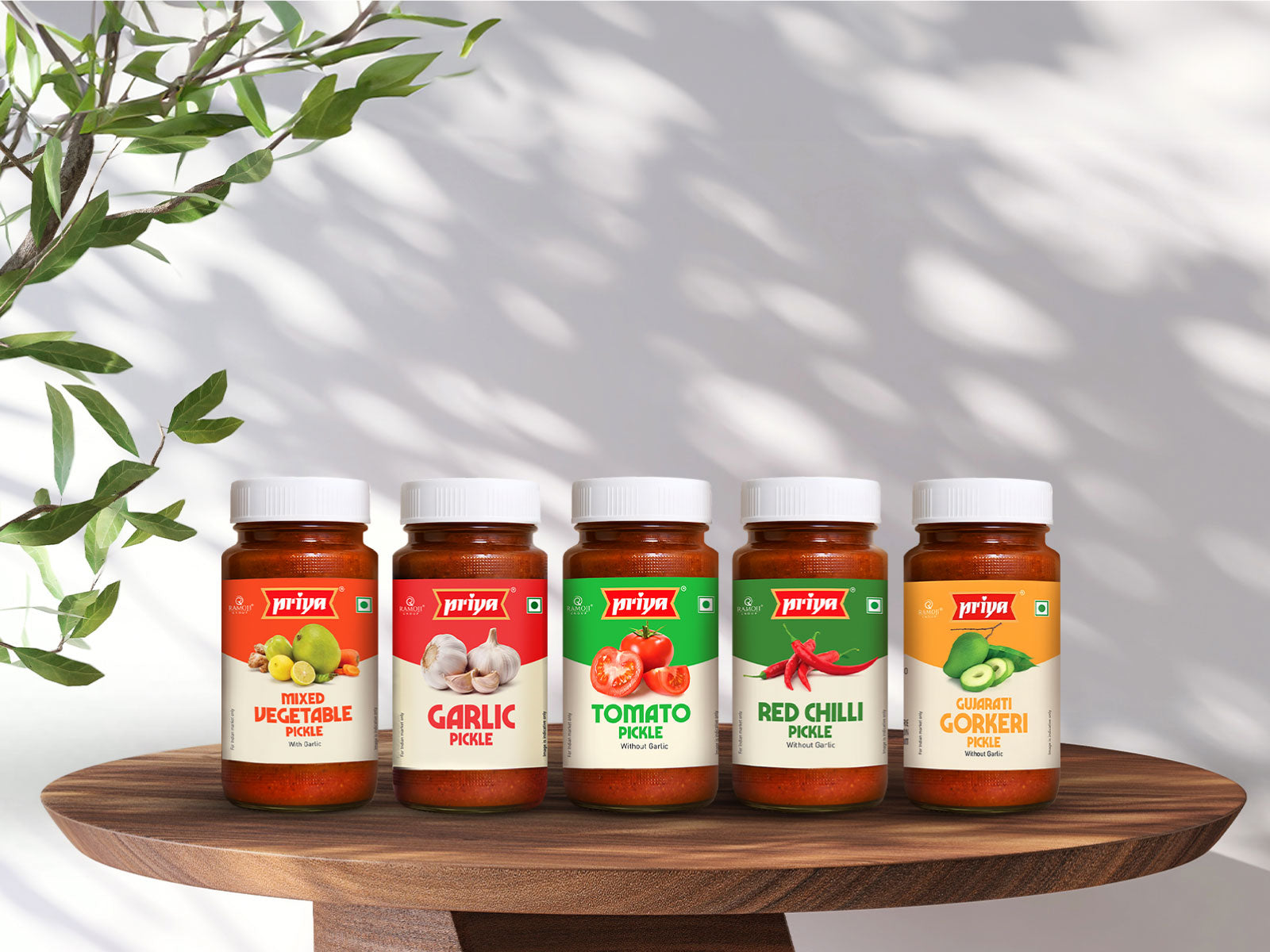
There's something intensely old-fashioned about opening a jar of pickles on the dining table. That initial whiff, spicy, sour, a touch sharp, a touch sweet, greets your nose and your memories. For most Indian households, pickles aren't just condiments. They're tradition, flavor, and time in a bottle. Mango pickle may be the one of them all but come on: there are plenty of underrated side heroes in our kitchen waiting for their moment in the sun. Today, we're going to introduce you to five of them that will make your curd rice hum, your parathas sway, and your fingers wish to lick them once more. Let's open the jar. 1. Garlic Pickle: The Bold One If pickles had personalities, garlic pickle would be that fiery friend who speaks the truth, unapologetically. Spiced with whole peeled cloves of garlic slow-cooked in mustard oil, dried spices, and even jaggery sometimes for a sweet surprise, this pickle is intense, pungent, and full of attitude. In South Indian cuisine, it's usually served alongside steaming idlis and ghee. In the North, it's the secret ingredient for enhancing a simple dal-chawal meal. Why we love it: Because garlic doesn't try to be anything it isn't. It's pungent, hot, and it's incredibly flavorful, and when it ferments, it mellows just enough to hug your taste buds. Perk: It's said to help digest and warm your body in winter. Have it with: Curd rice, parathas, or even a slice of bread and butter on lazy afternoons. 2. Tomato Pickle: The Tangy Charmer This one’s for those who love a little surprise on their plate. Tomato pickle — known as thakkali oorugai in Tamil and tomato pachadi in Telugu — brings together the richness of ripe tomatoes, the warmth of traditional tempering, and the depth of regional flavours. In many Telangana and Andhra homes, it’s a breakfast staple — drizzled over hot rice with ghee or paired with crispy dosas. Its mellow tang and rich texture add that little extra something to any meal. Why we love it: Because it strikes a beautiful balance — juicy yet grounded, familiar yet distinctive. It’s like comfort food with a little flair. And let’s be honest, it can make even a simple upma feel special. Have it with: Steaming rice and ghee, dosas, pongal, or even a dollop in a sandwich for an unexpected twist. 3. Lahsun Ka Achaar: The North Indian Comfort Star Garlic again, yes, but in a different attire. In contrast to its Southern counterpart, lahsun ka achaar in North India is chunkier, oilier, and abundant with Punjabi-style masala love. This is prepared with mustard oil, saunf, kalonji, and lots and lots of sunshine. There's a recipe in every Punjabi home that's been passed down like inherited jewelry. Prepared in winter and left to age by the windowsill, it adds warmth to roti-sabzi meals and is nearly medicinal for a sore throat. Why we love it: It's like a Punjabi hug: warm, generous, a bit loud, and full of love. Eat with: Ajwain parathas, aloo-puri, or just plain mathri. 4. Red Chilli Pickle: The Spicy Favorite We shall just say that this is not for the weak at heart. Mirchi ka achaar, or red chili pickle , is prepared with fat, fresh red chillies, stuffed or cut, marinated with mustard, fenugreek, and lemon juice, and left in the sun to absorb power. This pickle doesn't remain on the side of your plate. It demands attention. Prepared in winter and left to mature near the windowsill, it heats roti-sabzi foods and is almost medicinal when you have a sore throat. Why we love it: It's a Punjabi hug: warm and generous and loud and full of love. Serve with: Ajwain parathas, aloo-puri, or simply plain mathri. 5. Mixed Pickle: The Chaos That Works This is the kitchen remix we never knew we needed: mango pieces, carrots, lime, green chillies, and sometimes even turnip, all dancing together in a masaledar (full of spices) rain. Each spoon of mixed pickle is different. Some bites strike you with tanginess, some with sweetness or heat. It's unpredictable and completely addictive. Why we love it: Since it's a bit of everything, like life. A spoonful of chaos, a pinch of balance, a bite of surprise. Eat it with: Literally anything: poha, thepla, dal rice, chhole bhature, you name it. Pickles Are Emotion Indian pickles are tales in jars. They are your grandmother's secret, your mother's instinct, and your cheat-day wish all wrapped up in one. Their making is a ritual: drying the ingredients on muslin cloths, waiting for the sun to be kind, mixing with bare hands, keeping them in enormous ceramic barnis (jars), and hoping the weather doesn't play tricks on the process. We don't simply consume pickles. We recall individuals and memories in their regard. The Final Bite If you've grown up with fingers dipped in mango pickle jars, it's time to get acquainted with the rest of the family. Garlic pickle's hotness, tomato pickle's tang, lahsun's warmth, red chilli's theatrics, and the mixed magic, they're all waiting at the corner of your plate. So next time you sit down to a wholesome Indian meal, don't forget to include a spoonful of story.Because sometimes, the smallest spoon carries the loudest flavor.
Unlikely Yet Delicious: Secret Food Pairings Loved in South Indian Kitchens

News

Unlikely Yet Delicious: Secret Food Pairings Loved in South Indian Kitchens

by Priya Foods on Jul 14 2025
Ask anyone for South Indian food, and you will get the usual suspects: coconut chutney with dosa, rasam with rice, and sambar with idli. All of them, no question, are classics! But there is a delicious little world of secret food pairings. The type that never makes it into cookbooks or on food TV. The type that occurs out of lazy Sunday lunches, rainy day hunger, and whimsical experiments by idle teens and grandmas. Here's a look at some of those playful, quirky couples from real South Indian homes, with some of our favorite Priya pickles. And who knows? One of them could become your new comfort food staple. 1. Biryani Gets a Fiery Best Friend: Avakaya Pickle Combo If you're from Andhra, you'll be familiar with this combo. For everyone else, join us in the world of spice.Biryani is a powerful enough dish on its own, spicy rice piled high with soft meat or vegetables, replete with spice. But in the majority of Telugu households, it's served with a spoonful of Avakaya Pickle, the mythic mango pickle immersed in mustard and red chilli. Sound fiery? That's because it is. But somehow, the heat from the Avakaya doesn’t compete with the biryani’s spice, it complements it. The sharpness of mustard oil and the tang of raw mango create a layered depth that makes each mouthful more exciting than the last. Forget raita. Once you’ve had biryani with Avakaya, there’s no going back. 2. When Idlis Stop Being Boring: The Zing of Lime Ginger Pickle Light, airy idlis meet a zesty ginger surprise that transforms breakfast into an assertive experience. Idlis are the favorite of all of us. They are nutritious, light, and the perfect breakfast food. But come on, on their own, they are a little dull. Enter Lime Ginger Pickle, idlis' best friend they never knew existed. The zesty, citrusy zip of lime complements the gentle spiciness of ginger in a flavor that opens your senses. Slather a warm idli with this pickle, and what used to be a flat breakfast now turns into a flavor explosion. Add some ghee on top, and comfort turns sizzling. 3. The Dosa You Know, But with a Tangy Rooty Twist: Mango Ginger Magic Dosas are great. But put them out with the cleverly wonderful Mango Ginger Pickle, and you have something intelligibly brilliant. Mango Ginger Pickle is not as common as mango or regular ginger pickle but is deserving of an individual spotlight. To make it, a particular root that looks ginger-like but tastes of raw mango is used, and thus the pickle is made, an exquisite mixture of a little spiciness and tanginess. And when served with the crunchy sides of a just-cooked hot dosa? Something just works. No overwhelming coconut chutney or sambar here, just the dosa and that tearing tang. It's subtle, earthy, and tastes like something said quietly. 4. Curd Rice With a Kick: Red Chilli Pickle Changes the Mood One bite cool, the other hot, this combination is the best kind of flavor mood swing. Curd rice is the unassuming comfort food of South India. It's what you have when you're stuffed, exhausted, or just looking for something reassuring. But there's a secret trick that many Tamil and Telugu households know: a spoonful of Red chilli Pickle on the side. The oil-richness and intense spice of the pickle cut through the blandness of curd rice, adding a justified drama to an otherwise low-key dish. It keeps your taste buds on their toes. Hot. Cold. Fire. Ice. It's a mess. But it works. 5. Toast Isn’t Boring Anymore: Tomato Pickle Brings the Punch This is the way South Indian homes make a plain, ordinary slice become something you really want. Toast is merely seen as a dull breakfast food, but not when Tomato Pickle is around. This hot, sour pickle, usually containing garlic, red chillies, and juicy tomatoes cooked down into a thick paste, is ideal for slathering over freshly toasted bread. It's more like a spicy jam but with so much more attitude. For an added level of joy, top with a slice of cheese or a soft-boiled egg. Breakfast, done. 6. Mini Uthappams Meet Sweet Mango Pickle: A Combo You Didn’t See Coming Sweet, spicy, and savory, this unlikely pair teases your taste buds in the most wonderful way. Mini uthappams are a delight on their own, thick and fluffy, and usually topped with onion or tomato. But in some kitchens, there's an added surprise: a spoonful of Sweet Mango Pickle on the side. At first, it seems off. Sugar with pickle? With dosa? But take a bite, and you get it. The sweetness cuts through the tartness in the uthappam batter, and the subtle heat in the pickle provides a welcome kick. It's a combination both children and adults love, and one that has you reaching for "just one more. 7. Crunch + Chaos = Snack Time Goals: Murukku and Mixed Pickle Evening tea has just become a lot more exciting, courtesy of this highly addictive combination. South Indian evenings are never complete without something crunchy to crunch on: murukku, thattai, seedai… the options are numerous. But the magic begins when someone at home (most likely an elder) secretly brings out the Mixed Pickle. You dip. You bite. And your mouth ignites. The chilli oil of the pickle sticks to the crispy twists of murukku, permeating into every ridge. The vegetable-mango-green chilli-lemon pickle provides little bursts of taste that leave your hands returning to the plate. So Why Do These Combos Really Work? On the face of it, certain of these combinations are hardly kitchen mishaps. Biryani with pickle? Idli with lime and ginger? Bread toast with tomato pickle? But the thing is, they do work, not through logic, but through feeling. It's always been a balance in South Indian cuisine of hot and cool, soft and crunchy, and sour and sweet. These odd pairings may not be playing by the rulebook, but they have rhythm in flavor. A simple curd rice is given a bold heart by adding a fiery red chilli pickle. A crunchy dosa is brought alive by being immersed in the zesty bite of mango ginger. It's also texture, not taste alone. That crunchy murukku dipped in fiery mixed pickle oil? It's the crunch and the wallop combined that's addictive. That soft uthappam with sweet mango pickle? It's squishy and sticky and spicy, and your brain just wants to do it again. And then, of course, there is the emotional component. These combinations are usually the result of habit, memory, or raw improvisation. Perhaps your granddad used to have biryani with Avakaya every time, or your mother realized one morning that tomato pickle is as good as jam on toast. These are not recipes, but discoveries, transmitted through taste rather than instructions. They're not complicated. They're homey, a little bit naughty, and wonderfully gratifying in the way only home-cooked experiments can be. That's why they work. Not because they should, but because they do.
Travel Through Taste: A South Indian Meal with Regional Pickle Pairings

News

Travel Through Taste: A South Indian Meal with Regional Pickle Pairings

by Priya Foods on Jul 14 2025
If food is a path, then South Indian cuisine is an entire atlas. From steaming rice and warming curries to cooling curd and crunchy accompaniments, every dish takes its careful place. But there is one element that goes about quietly imposing its gentle domination to change the plate: the pickle. They are referred to as Uragaya, Pachadi or Pacchalu in Telugu, Oorugai in Tamil, Achaar in Malayalam, and Uppinakayi in Kannada. But pickles in South Indian kitchens are more than a condiment. They're regional pride, preserved history, and flavor bombs that turn the humblest of meals into something extraordinary. Let's take a look at Andhra Pradesh, Tamil Nadu, Kerala, and Karnataka and check what meals these houses typically serve accompanied by their favorite pickles. Andhra Pradesh & Telangana: Spice-Loving Traditions and the Boldness of Pachadi In Telugu homes, meals are more than sustenance — they are rituals of taste, memory, and spice. Here, the first bite doesn’t set the stage — it steals the spotlight. A scoop of piping hot rice, a drizzle of golden ghee, and the bold arrival of Pachadi — the beloved pickle — mark the beginning of something soulful. Especially Avakaya, the undisputed queen of Telugu pickles, doesn't just accompany the meal — it starts it. 1. Muddapappu Annam + Avakaya Pachadi Muddapappu is minimalism at its finest — plain toor dal, mashed soft, seasoned only with warmth and ghee. It’s a quiet canvas. Enter Avakaya: chunky mangoes, mustard punch, red chilli fire, and gingelly oil intensity. This pairing is a classic — the creamy calm of lentils meeting the fearless heat of Andhra's iconic mango pickle. A humble yet heroic start to a traditional Telugu feast. 2. Perugu Annam + Nimmakaya Pachadi After the spice storms, it’s time for calm. Perugu Annam — curd rice — is comfort itself. Cool, soothing, and often eaten at the end of meals, it’s paired with a sharp contrast: Nimmakaya Pachadi, the tangy lemon pickle. Over time, it ferments and deepens, bringing waves of salty-sour complexity that cut through the mellow curd rice. A combination that whispers, then lingers. Tamil Nadu: Balance and the Unobtrusive Strength of Oorugai Tamil food is based on the balancing of flavors. Everything on the banana leaf is balanced by each other, and Oorugai, no matter how little in quantity, is never absent. 1. Thayir Sadam + Elumichai Oorugai Thayir Sadam, or curd rice, is a ubiquitous dish in Tamil households, particularly in summer. It is soothing, creamy, and requires contrast, which is provided by Elumichai Oorugai, a lemon pickle. This pickle is slightly bitter, mildly spiced, and salty, and its brightness and appetite-stimulating sharpness are what the dish requires. 2. Puli Sadam + Poondu Oorugai Puli Sadam is tamarind-flavored rice seasoned with mustard seeds, curry leaves, and peanuts. It is hot and sour, but even more so when consumed with Poondu Oorugai, garlic pickle that gives heat and energy. The combination is a pungent, flavorful one that is often packed for lunch. Kerala: Vinegar-Soaked Brightness and the Depth of achaar Kerala pickles, or achaar, stand apart in that they are vinegar-based and low-oil. They are stronger in taste, stronger in color, and more full-bodied with fermented depth. 1. Kanji + Kadumanga achaar Kanji is rice porridge made from parboiled rice, often accompanied by green gram curry or pickle as a side dish. Kadumanga achaar is a raw mango pickle made from mustard, chilli, and brine. Salty crunch and acidity of this pickle provide contrasting interest to the otherwise dull kanji. 2. Ghee Rice + Inji Puli Ghee rice is flavored rice made with ghee, spices, and sometimes nuts. It is especially good with Inji Puli, a sweet, spicy, and sour ginger pickle with tamarind and jaggery. The pickle provides a relishing contrast to the richness of the rice. Karnataka: Mild Spice and the Roundness of Uppinakayi Kannadiga food ranges from coconut-rich southern food to pungent northern rotis. Uppinakayi is no exception, ranging from plain lemon pickles to vegetable pairs such as fenugreek and mustard. 1. Jolad Rotti + Menthya Mangai Uppinakayi Jolad Rotti is a jowar pancake consumed extensively throughout North Karnataka. This is often served with dry chutneys, brinjal palya, and Menthya Mangai Uppinakayi, a mango pickle that has fenugreek and mustard as seasonings. The bitterness, tartness, and spiciness of the pickle blend well with the grainy, earthy rotti. 2. Saaru Anna + Nimbekai Uppinakayi Saaru is Karnataka's equivalent of rasam, a peppery tamarind soup. When served with rice (Saaru Anna), it is comforting and soothing. Nimbekai Uppinakayi, or lemon pickle, adds a burst of heat and sourness to cut through the mild saaru and add life to the dish. Understanding the Logic of South Indian Pickle Pairings If you've ever asked yourself why some South Indian pickles always turn up alongside particular dishes, it's not coincidence, there's unassuming logic behind each bite. These combinations have been influenced over the years not only by taste but also by the way they make you feel when you're done eating. Mild foods like curd rice or dal rice are soft and comforting, so they're usually served with sharp, spicy pickles such as Avakaya or lemon Uragaya. That sudden burst of heat and salt gets your taste buds perked up and turns a plain plate into a satisfying meal. On the other hand, already flavorful dishes like tamarind rice or bisibelebath don’t need something too strong on the side. So you’ll usually see them served with a milder garlic or ginger pickle that complements rather than competes. There is also a digestive explanation for it. South Indian pickles are often fermented or filled with ingredients such as ginger, garlic, or methi seeds, all of which assist the body to digest more substantial food. So what appears to be a habit actually turns out to be a thought-out process that keeps both your stomach and your taste buds satisfied.
Why These 5 Pickles Will Never Go Out of Style in South Indian Homes

News

Why These 5 Pickles Will Never Go Out of Style in South Indian Homes

by Priya Foods on Jun 10 2025
In any South Indian kitchen, you will always find a jar relegated to the back of the shelf, hiding behind the masala dabbas and lentil tins. It's not a jar. It's history. Some might call it magic. It's the single item that can upgrade a plate of plain rice on a lazy Sunday afternoon or make curd rice a dish you'll never tire of. We are referring to pickles. Not just any pickles, but these five. Let's not forget, despite how sleek our kitchens now appear, with their air fryers and microwave drawers, there's always space (and a lot of affection) for those good old Avakaya, Garlic, Gongura, Amla, and regular Mango pickles. They're not condiments, really. They're part of how we dine, how we recall things, and how we hand things down. Avakaya Pickle Each summer, on schedule, mangoes overrun the markets, and you can guess what follows: someone in the family says it's time to make a large quantity of Avakaya. The air is filled with the smell of mustard and chili powder for days. Oil sits on the counter, and all the relatives are arguing over whose aunt's recipe is better. Avakaya Pickle is not just Andhra's signature pickle. It's the pickle. It appears on plates of hot rice and ghee, lunchboxes, and dosa with no chutney to be found. It's loud. It's fearless. And it's something that you can never, ever prepare in small batches because it's a sharing kind of thing. People might move houses, even move countries, but you’ll always find a bottle of Avakaya somewhere in the suitcase. That says something. Garlic Pickle Garlic pickle is a low-key hero. You don't know how much you miss it until it's gone from the table. It goes so well beside curd rice or idlis and provides that burst of flavor you didn't even know you wanted. Our grandmothers were right when they said that garlic warms the body and gets the belly happy. And though we can't possibly know all the ayurvedic science behind it, we've all had a spoonful of garlic pickle served with the meal when we've been feeling off. It's the sort of pickle that shows up in ordinary meals, offsets heavier fare, and somehow manages to do the trick just as well for pongal as for chapati rolls. Subtle but necessary. Gongura Pickle Now Gongura (sorrel leaves) is a class in itself. At Andhra households, it's not even a pickle, it's a goodness-packed flex. If someone is giving you Gongura pachadi prepared with love and just the right amount of chili, you're practically family. There's something special about that pungent, slightly acidic hit that Gongura has. It's not attempting to be friendly. It's piercing and up-your-nose, and it vivifies all the rest of the food on the plate. Those who've grown up consuming Gongura swear by it. And those who haven't? Well, once they experience it, there is no going back. It comes with the flavor of the place, of hot afternoons and simple lunches, of mothers bottling it for children migrating to other cities. Amla Pickle This one's a slow-burner. Not everybody grows up enjoying the love for amla pickle, but the older you are, the more you realize how great it is. It's that bittersweet, spicy, slightly medicinal taste that suddenly feels just so right alongside your rasam or even plain rice. Amla, or nellikai, has always worn that aura of health. Full of vitamin C, immunity-friendly, and added to everything from chyawanprash to hair oil. But as a pickle, it's something else, something delicious, evocative, and surprisingly heartwarming. You won’t see it at every table, but the homes that keep it always come back to it. Especially when someone in the family’s not feeling well or you’re just tired of the usual spice bomb pickles. Mango Pickle (The Classic) And now, this one is simply non-negotiable. Mango pickle is the go-to in every South Indian home. Forget the sambhar, but with or without mango pickle and some curd, dinner is done. We all have our variation, some add more mustard, some add more chili, and some let it float in oil for months. But the principle is still the same: raw mangoes, salt, spice, and time. It's one of those dishes that you make at family gatherings, with kids snatching pieces of mango and elders getting prickly about the ratio. Even today, the smell of mango pickle being made at home is the signal that summer is here. And no matter how many jars you buy from the store, nothing beats the flavor of the one that your mom made when you left for college. Traveling Pickles The best part is that these pickles didn't remain in their hometowns. They traveled. With students migrating to the U.S. or U.K., with parents moving to Malaysia or Singapore, with cousins lugging ziplock bags full of pickles through customs. It's not just food. It's a connection to home. The spiciness of the taste is forgotten in the instant comfort. For 45 years now, Priya Foods has understood this. These pickles aren’t trends. They’re traditions. Whether you’re sitting in Hyderabad or Houston, it still feels like home when there’s pickle on your plate. And Priya has been a constant in that journey, bottling not just spice but stories, not just food but the feeling of belonging. So yes, food habits may shift, and fads may come and go, but these five pickles are not going anywhere. They'll remain in our kitchen, on our plate, and in our luggage. Because certain things, such as the comfort of mango pickle with curd rice, never truly go out of fashion.
5 Must-Have Pastes & Masalas That Transform Everyday Cooking

News

5 Must-Have Pastes & Masalas That Transform Everyday Cooking

by Priya Foods on Jun 10 2025
If you've ever gazed at raw chicken or a bag of rice wondering how to get it to taste like something your family would welcome with open arms, you're not alone. Cooking daily can feel like drudgery, particularly when you want those bright, familiar South Indian spices without the two-hour preparation. That's when the proper pastes and masalas sweep in like your trusty kitchen sidekicks. Whether you're making a weeknight chicken curry or trying to recreate your grandmother's iconic biryani, a few staples in your pantry can turn your meal from two-dimensional to three-dimensional in the span of a few minutes. In this blog, let's discuss five pastes and masalas that can do just that, sweat-free. 1. Biryani Masala Paste There's something about a good biryani that is like a party. But making it? That's usually the other way around. Roasting the spices, grinding them out, and layering it all just so. It's overwhelming. Along comes the biryani masala paste. This single shortcut delivers that rich, heady flavor you expect with Hyderabadi biryani without so much as touching a mortar and pestle. It delivers the roasted spice depth, the heat of cinnamon and cardamom, and the gentle burn that makes biryani distinct. You just marinate your meat, add the paste, and cook with rice. No hesitations, no dry masala disaster. Why it works: Layers of spice, already mixed Same taste every time Trims prep by at least half If you want that dhaba depth without bogging down in the kitchen, this one's a game-changer. 2. Garlic Paste South Indian cooking begins with a sizzle, hot oil, mustard seeds, and a blob of garlic that lands in the pan and immediately sends the whole house smelling like home. Garlic paste is the unsung hero of innumerable mutton and seafood gravies. It doesn't merely flavor; it builds. It adds that quintessential earthiness that finds perfect balance with the pungency of chilies and the sourness of tamarind. And if you've ever attempted to peel 20 cloves of garlic on a hectic day, you know just how much a jar of pre-prepped garlic paste can assist you. Why it works: Daring flavor with no peeling or chopping Enhances the body of any curry Needed for tempering and gravy-making From meen kuzhambu to pepper chicken fry, garlic paste provides your dish with a bold, confident beginning, without holding you back. 3. Ginger & Garlic Paste Two can accomplish what one cannot at times. Ginger and garlic paste are a perfect example. In harmony, they provide balance: ginger with its peppery, slightly sweet heat and garlic with its pungent, earthy depth. This mix is a must-buy if you are a frequent gravy maker. It doesn't matter whether you're making a chicken curry with fresh tomatoes or a prawn delicacy loaded with masalas; ginger-garlic paste makes a reliable foundation that takes all the other spices along with ease. And it's simply awesome as a marinating agent too. It tenderizes the meat and allows the masala to penetrate deep within the meat. Why it works: One spoonful, perfectly balanced Saves 15 minutes of chopping Great for marination and masala bases It's the sort of product you find yourself grabbing for automatically once you begin using it. It's like your kitchen autopilot for great gravies. 4. Ginger Paste While garlic is the low, rich note in a dish, ginger is the bright, piercing one. In South Indian coastal cuisine, particularly fish and crab curries, fresh ginger is an absolute must. Ginger paste adds that dash of rawness that pierces through the fattiness of meat and seafood. It's also unexpectedly versatile. Add it to vegetable preparations such as sambar, rasam, or even basic poriyals, and it gives them an instant boost. Ginger also gets along with dals. It matches the earthy flavor and provides a slight zing. How and why: Tones up rich gravies No need to grate or peel Suitable for both veg and non-veg preparations It's particularly convenient if you prepare several meals a day. Add just a spoonful of this paste, and your dishes begin to taste slightly more like they originated in your mother's kitchen. 5. Meat Masala And this isn't your run-of-the-mill kitchen masala. Meat masala is in-your-face, unashamed, and designed for dishes that aren't afraid of spice. This mixture is made for non-vegetarian enthusiasts. It contains stronger spices such as black cardamom, cloves, and black pepper, all combined in the proper proportions to taste of red meat and poultry at their best. Use it for mutton curry, keema, or even chicken roast, and you’ll get that slow-cooked flavor without actually slow-cooking for hours. Why it works: Made for meat’s strong flavour No guesswork with masalas One Masala = Rich full flavor You don’t need a hundred spice jars when one does the job well. Why These Pastes and Masalas Really Do Work So why are these specific pastes and masalas worth hoarding? Not only is it the taste (although that's a big chunk of it). It's the amount of time, effort, and headspace they free up for you. When you're balancing work, family, and the daily "what's for dinner" dilemma, having pre-to-use assistance that doesn't sacrifice authenticity is gold. And if you're buying these pastes from Priya Foods, you're receiving something extra: heritage. Embedded in South Indian Authenticity While there are other generic pastes that try to be "everything for everything," Priya Foods remains authentic to their origins. The spice mixes and proportions are true representations of actual Andhra-style cooking. That translates into hot undertones, well-proportioned aromatics, and that unmistakable flavor of home. Trusted by Generations This is not some fly-by-night brand that appeared overnight on a store shelf. Priya Foods has existed for more than 45 years. If you're from a South Indian family, there's a good chance your grandmother or mom kept a jar of Priya pickle or paste hidden away in the fridge. It's a family brand. Ready-to-Use, Without the Shortcut Taste You understand how some cooking shortcuts are plain obvious, such as a dull curry or an off-tasting masala? Not here. These pastes are tuned to actual cooking. You will not have an artificial aftertaste or stale flavor. But pure, clean, balanced spices that taste like they were freshly ground in your own kitchen. Busy? Hungry? These Pastes Cook a Full Meal in 15 Minutes We're not even stretching the truth here. Combine one of these pastes or masalas with an onion, a tomato, a couple of spoons of oil, and your choice of protein or vegetable, and you're finished. In 15 minutes, you can enjoy Chicken curry with garlic paste and meat masala Fish curry with ginger paste and tamarind Biryani with ready-to-cook rice and biryani masala paste That's quicker than ordering in, and it tastes like you made an effort. If your kitchen countertop is stocked with these five heroes, you're set. They're not only time-savers. They're taste-befrienders who understand what South Indian food must taste like. You don't need elaborate recipes or hours spent in the kitchen. Only good ingredients and some trusty jars. And when those jars also happen to be provided by a brand that has been feeding tables for generations, the end product is not just tasty but comforting too. The next time you're about to reach for takeout or order in, grab your pantry cupboard and let these pastes do it all.
Priya foods Roti pachadi

News

Exploring the cultural and traditional roots of Roti Pachadi

by Priya Foods on Aug 23 2024
Exploring the cultural and traditional roots of Roti PachadiIn the warm embrace of Indian kitchens, where tradition breathes life into every meal, Roti Pachadi stands as a testament to familial bonds and culinary heritage. This delicious side-dish, vibrant with color, flavor, and memories captures the essence of nostalgia, family, and love like no other. The Cultural Significance of Roti Pachadi Priya Foods connects you to heritage with each spoonful · Historical Roots: Roti Pachadi, akin to chutney, has been a staple in Telugu cuisine for many decades, enhancing meals with its rich flavors and textures. Culinary Diversity: Each region in Andhra Pradesh and Telangana offers its unique twist on Pachadi, making it a vibrant part of local culinary practices. Spotlight on Priya’s Roti Pachadi Varieties At Priya Foods, we honor our rich Telugu tradition with a range of lip-smacking Roit Pachadi, each inspired from ancestral stone-ground recipes to give you a taste of love with hand-picked vegetables, straight from ammamma’s vantagadi Beerakaaya Chutney: Experience the subtlety of ridge gourd, transformed into a delightful chutney. Dosakaaya Chutney: Dive into the refreshing taste of yellow cucumber chutney, perfect for hot summer days. Vankaaya Chutney: Savor the robust flavor of brinjal in this traditional favorite. Dondakaaya Chutney: It’s tangy, it’s tasty, and it is an instant blast from the past! You will find this avatar of ivy gourd absolutely irresistible. Innovative Culinary Uses – Endless possibilities There are so many ways in which you could use Priya’s Roti Pachadi that you’ll never fall short of options. Let’s explore a few: Steaming hot rice and Vankaaya Chutney with a dallop of ghee – Find a better dish, we’ll wait! Upma and a Dondaakaya Chutney – a winning combo! Parathas and a Beerakaya Chutney on the side – mouth-watering! Dosakaaya Chutney and roti – You can try but you won’t be able to ignore it! Health Benefits of Roti Pachadi Ingredients Taste and wellness go hand in hand at Priya Foods. Taste it to believe it! Nutritional Value: Ingredients like brinjal, yellow cucumber, ivy gourd, and ridge gourd are low in calories but high in vitamins and fiber. Digestive Health: The natural spices and ingredients used in Pachadi help in improving digestion and overall gut health.   Priya’s Roti Pachadi collection is more than just a condiment; it’s a celebration of heritage, health, and the incredible diversity of Indian cuisine. Embrace these delightful chutneys and let them take your meals from ordinary to extraordinary. Join us in keeping the culinary traditions alive, one delicious spoonful at a time!  
Spicing up your dishes: Innovative uses of Priya Masalas

News

Spicing up your dishes: Innovative uses of Priya Masalas

by Priya Foods on Jun 25 2024
Fresh, homemade food. Perfect weather. A family weekend. What’s missing? A little spice!  Welcome to the flavorful world of Priya Foods, where spices are more than just ingredients—they're the essence of culinary creativity. In this blog, we will explore the various ways in which you can use our masalas to spice up your meals and make them unforgettable family recipes! Buckle up; some of these are very interesting and innovative! Breakfast with a Twist A lip-snacking twist to quinoa: Cook quinoa and toss it in some freshly diced vegetables with a seasoning of Priya Sindhi Biryani Masala. Start your day with this powerful and filling meal! Truly masala oats: Same old oats for breakfast every day? Make them extra special with a generous sprinkling of Priya Pav Bhaji Masala! Lunch Favorites Yummy paneer done right: Move on from boring and amp up your paneer dish by marinating it in Priya Rajma Masala! You can either grill it or prepare a curry for a flavorful mid-day delight. Capsicum stuffed with happiness: Stuff capsicum with a mixture of cooked rice, minced meat seasoned with Priya Hyderabadi Mutton Masala, and fresh herbs for an aromatic dish. Snack Time Reinvented Spiced Popcorn: Toss popcorn with a light sprinkle of Chicken Masala for a quick snack. Roasted Nuts: Coat almonds or cashews in a mixture of oil and Pav Baji Masala before roasting. Makhaane-like-never-before: Makhaana or fox nuts are very popular snacks today because they are healthy and yummy. Make them even more delicious with a sprinkling of Chaat Masala. Dinner Innovations Masala pizza: Enhance your pizza sauce with Fish Fry Masala for a seafood-inspired creation. Masala pasta: Swap your usual herbs for a dash of Noodles/Pasta Masala to bring new life to Italian night. Stir-fry vegetables: Quickly stir-fry your favorite vegetables with chunks of chicken, tossing them with Priya Andhra Chicken Masala for a spicy, savory dinner that's ready in minutes. Conclusion There’s so much you can do with Priya Masalas – you are only limited by your imagination! Go on then, try these out or come up with new ones. Don’t forget to share them with us so that we appreciate your creativity too! To buy our masalas, please head to our https://priyafoods.com and shop now!
5 quick and easy instant mixes for a healthy breakfast

News

5 quick and easy instant mixes for a healthy breakfast

by Priya Foods on Jun 20 2024
Early mornings, busy mornings, lazy mornings! How do we make them interesting and healthy? Priya Foods is the answer, of course! Start your mornings with a spark of flavor and a dash of health! Explore our range of instant mixes that transform traditional breakfasts into quick, nutritious meals for your busy lifestyle during the weekdays and lazy mornings during the weekends. Here are a few ideas that are not just easy but also super quick: Priya Instant Idli Mix – Effortless, steamed delights Idlis are the perfect start to any day! They are low in calories and high in steaming satisfaction. With Priya Instant Idli Mix you don’t have to prep for this excellent breakfast one whole day in advance! Simply add water, ferment briefly, and steam. Serve with coconut chutney or sambar for a complete meal. Priya Instant Upma Mix - Savory Semolina in Minutes Did you know that upma is rich in fiber? It boosts digestion and ensures that you are full for a longer period of time, eliminating mini-cravings until lunchtime! Our Instant Upma mix takes just a few minutes to be ready to savour. Here’s how to prepare it: Boil 650 ml water in a vessel Add the dehydrated vegetables (included in the pack in a pouch) and let them boil for around 10 minutes Add the Instant Upma Mix while stirring continuously so that there are no lumps Cook for about 3 minutes and serve Bonus: Add a tablespoon of ghee to further enhance the flavours. Priya Instant Pesarattu Mix – Crispy & Protein-Packed! Pesarattu can help you start your day with a healthy protein kick! It is made from moong dal, which ranks high on the nutrition scale. So, how do you start your day with this hearty health boost? Just add water, mix, spread on a hot tawa, and flip it as it gets crispy. Serve it with ginger chutney or pickle for a nice, zesty start to your day. Priya Instant Rava Dosa Mix – Crisp dosas in a blink! Now, who doesn’t love rava dosas? If you are generally unable to satiate your craving because rava dosas are time-consuming, you will absolutely love our Instant Rava Dosa Mix. It is the right choice for any unplanned meal preps. All you have to do is to add water to the mix, spread it thin on the tawa and cook until it gets crispy. On the side, you can have sambar or chutney or both! Priya Instant Dosa Mix - Traditional Taste with Modern Convenience The OG breakfast – DOSA! It’s yummy, it’s healthy, it’s utterly satisfying BUT it is also tedious! There’s overnight soaking and grinding, and whatnot! If you’re looking for an easy fix, it’s right here – Priya Instant Dosa Mix! Mix, pour, flip, and DONE! You can give it your own personal twist with some cumin, green chillies, and chopped onions. Conclusion Priya Foods’ Instant Mixes are more than just quick meals—they're a deliciously healthy way to begin your day. Embrace these mixes for their blend of convenience and tradition, and revolutionize your morning routine with tastes that tickle your palate and warm your heart. Start every day with Priya, and enjoy a breakfast that’s as nutritious as it is YUM!